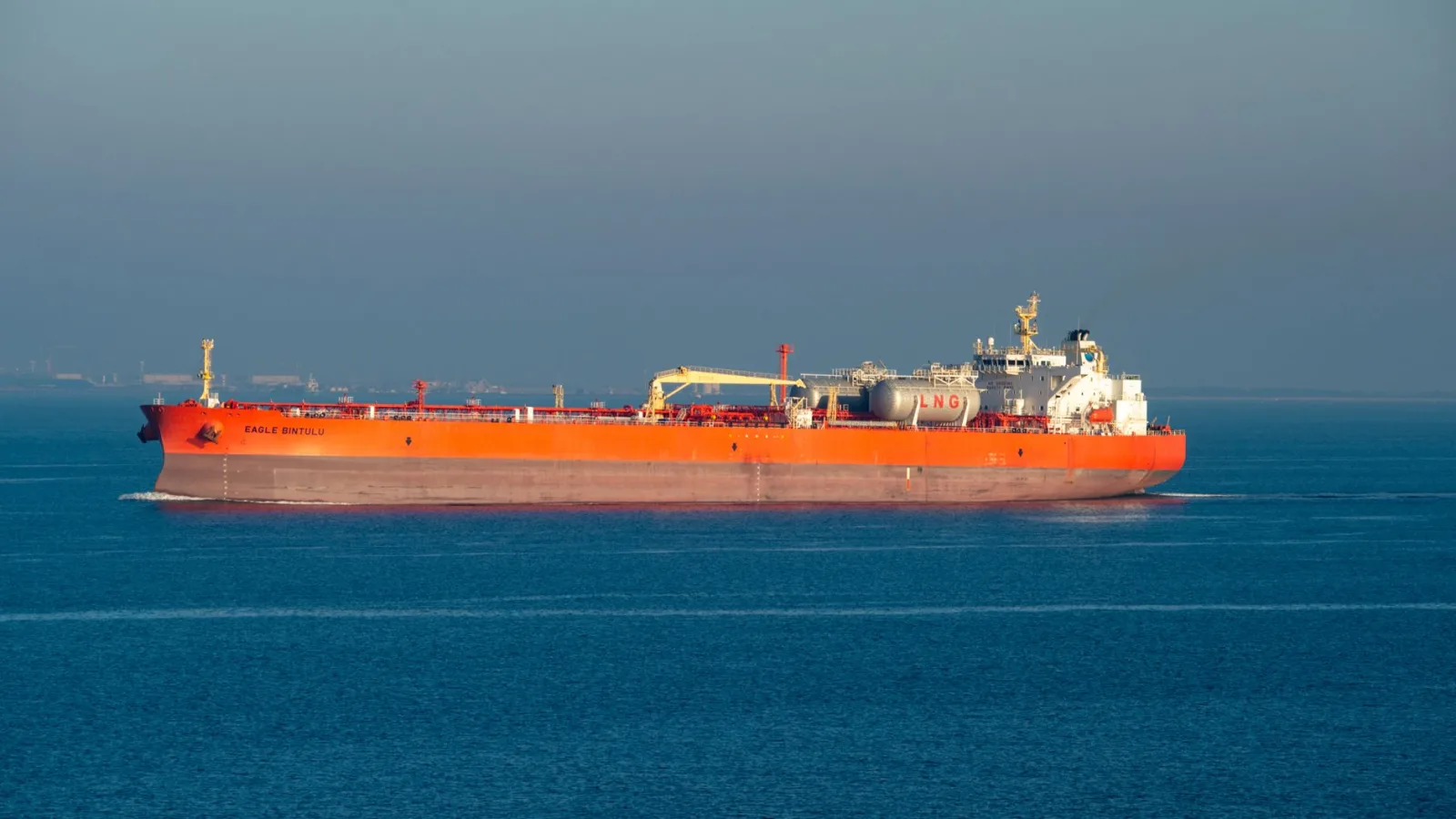
A vessel sustained damage and a crew casualty after being struck by an unknown projectile while transiting outbound in the Strait of Hormuz on Tuesday morning, according to the United Kingdom Maritime Trade Operations (UKMTO).
The UKMTO reported that the attack damaged the engine room, and the remaining crew members were subsequently assisted by the Omani Coast Guard. The incident occurred a day after a 60-day memorandum of understanding between the United States and Iran expired without a new agreement.
The attack coincides with a significant escalation in rhetoric surrounding the ongoing tensions between Washington and Tehran. US President Donald Trump told reporters on Monday that Iran would not agree to the type of deal he considered "necessary." In response, Iran announced a shift in its policy from defensive to "fully offensive" due to the deadlock in efforts to reach a permanent end to its conflict with the US.
President Trump has separately issued a stark warning to Oman, a US ally, threatening military action if it "gets in the way" of his attempts to force a peace deal with Iran. "If Oman gets in the way, we’ll bomb the s**t out of them," Trump stated in an interview with Fox News. This threat followed reports that Oman and Iran were working on their own solution to manage the strategic waterway.
Amid these rising tensions, Turkish President Recep Tayyip Erdogan has urged for continued diplomatic engagement with Iran. During a phone call with President Trump yesterday, Erdogan reportedly stressed the importance of pursuing diplomacy and stated that Turkey was prepared to contribute to peace talks between Washington and Tehran. The two leaders also discussed the conflicts in Iran and Gaza, bilateral ties, and the Mecca Joint Defence Agreement.
The Strait of Hormuz, a crucial choke point for global oil shipments, has seen continued low levels of shipping traffic. Preliminary shipping data indicated that only six commodity ships transited the strait yesterday – three exiting the Gulf and three entering – a slight increase from the weekend but well below the 10-day average of 11 ships, according to Kpler ship-tracking data. Notably, no very large crude carriers (VLCCs) or tankers carrying liquefied natural gas passed through the waterway.
The diplomatic deadlock follows President Trump's pledge last Friday to inflict severe economic damage on Iran. This commitment was reinforced by Treasury Secretary Scott Bessent's announcement that Washington plans to impose unprecedented restrictions on Tehran as early as next week. The United States, European Union, and United Nations have maintained trade embargoes, asset freezes, and sanctions against Iran since the late 1970s, citing concerns over Tehran's nuclear ambitions, human rights abuses, and support for militant factions.
The broader Middle East region continues to face significant instability. Oil prices rose this morning, with analysts attributing the increase to the perceived distance of a deal to end the Middle East war. Iran's stated adoption of a more offensive stance and the US ruling out an extension of a ceasefire agreement have heightened worries about energy supply.
Brent crude futures climbed by 27 cents, or 0.3 per cent, reaching $91.14 per barrel, after previously rising to their highest level since 30 July. US West Texas Intermediate (WTI) crude futures were up 42 cents at $85.04 a barrel, having gained more than 1 per cent earlier in the session to $85.37, their highest since 31 July.
Tim Waterer, chief market analyst at KCM, commented, "Oil has jumped to start the week as U.S.-Iran relations look increasingly shaky. A deal to reopen the Strait of Hormuz still does not appear to be in sight, and shipping numbers remain at a trickle."
Elsewhere in the region, an Israeli politician, Itamar Ben-Gvir, the minister of national security, publicly advocated for killing "30 to 40" people in Gaza every night during an appearance on the podcast The 8 October. Additionally, the Abu al-Zuhour military airport in northern Syria's Idlib province was reportedly hit by at least four airstrikes this morning, according to Al Jazeera. The attack, allegedly carried out by Israel, caused material damage to the airport's runway, though Syria has not yet issued an official statement.