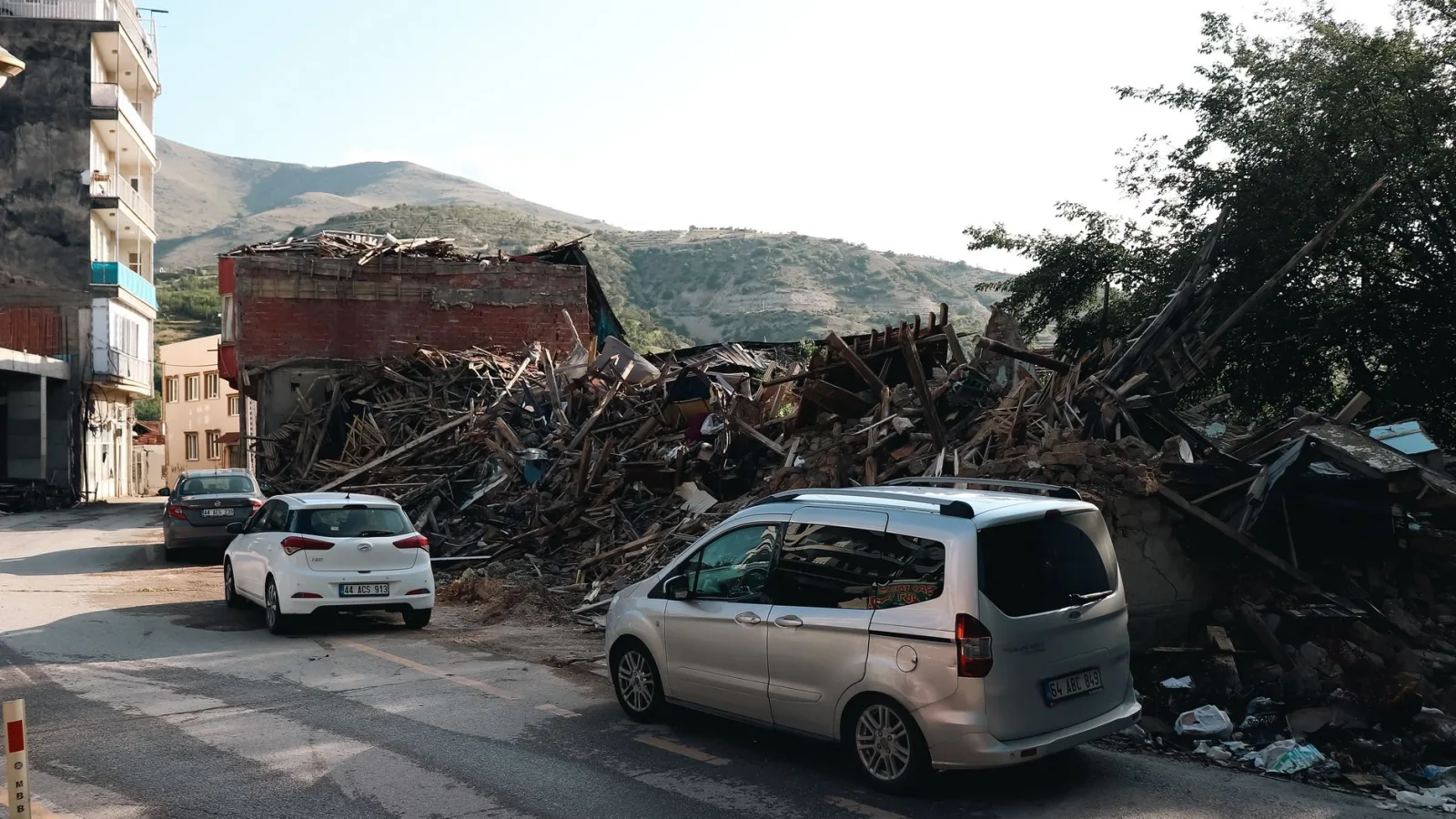
Venezuelan authorities are facing a large forensic and administrative challenge after twin earthquakes pushed the reported death toll above 2,600, leaving families to identify relatives at a temporary morgue set up inside a port storage facility in La Guaira.
This report contains descriptions of death and the identification of bodies.
Nine days after the tremors, local services remain under severe strain. With hospitals, shelters and damaged neighbourhoods already searched by many relatives, the port site known as Los Silos has become a central point for families trying to confirm whether missing loved ones are among the dead.
Officials have had to use improvised arrangements because of the scale of the disaster and the damage to local infrastructure. Bodies have been placed in temporary tents and outdoor areas while medical and forensic teams work through the process of identification, documentation and release to funeral services.
At the facility, families wait for hours on rows of chairs inside and outside the site. Armed personnel from the Bolivarian Armed Forces control entry while forensic workers and other staff manage the movement of relatives through the identification process.
BBC Mundo reported that some families have spent days moving between collapsed buildings, hospitals and shelters before arriving at Los Silos. One woman, who was looking for her nephew, said before entering that she feared what she might see, but believed it was the only way to end the uncertainty.
Inside the facility, relatives are directed through different stages depending on the condition of the remains and the information available. Those who believe they can recognise clothing or personal items may be taken to one area. Many others are asked to view images shown on television screens.
More than 1,000 photographs are being used in the process, according to the report. Workers scroll through images and enlarge details such as tattoos, teeth, scars, jewellery or clothing when families believe they may have found a match. In some cases, dental records are used where visual identification is no longer possible.
The conditions have made the work more difficult. Many bodies were recovered days after the earthquakes and have been exposed to high temperatures. Relatives have described struggling to identify people because of injuries, dust, swelling and decomposition.
Liliana González, a 60-year-old resident of Catia La Mar, told BBC Mundo that she had gone to the site to look for her aunt, but instead identified her 37-year-old nephew by a tattoo. She said he had not appeared on a list and that she had to review the images to find him.
Another relative, Modesta Alemán, 56, travelled from Carayaca to search for her older sister Matilde, who lived in Playa Grande, one of the hardest-hit areas. She said relatives had been told there were no survivors in the building, although volunteers later reported hearing voices from inside. She waited outside while other family members entered the facility to handle the identification.
The process does not end once a person is identified. If possible, fingerprints are taken. Bodies are then placed in coffins, and paperwork must be completed for a death certificate. That document is required before funeral homes can collect remains, creating further delays for families already waiting in difficult conditions.
Jéssica Soto, 42, told BBC Mundo she had waited for two days for the remains of her 15-year-old daughter and three-year-old granddaughter, who were trapped in their apartment after the earthquakes. Their bodies had been recovered nearly a week after the disaster, but she said the release was delayed by paperwork and transport arrangements.
The disaster has placed heavy pressure on Venezuela’s emergency response capacity, particularly in coastal areas of La Guaira where damaged buildings, limited access and the number of missing people have complicated recovery operations. Identification of the dead is a necessary legal and humanitarian step, but it has also become one of the most painful stages for survivors.
For families still searching, Los Silos is both an administrative checkpoint and a place of uncertainty. As recovery work continues in damaged neighbourhoods, some relatives may have to return more than once, waiting for forensic teams to confirm identities before they can arrange burials or cremations and begin the formal process of mourning.