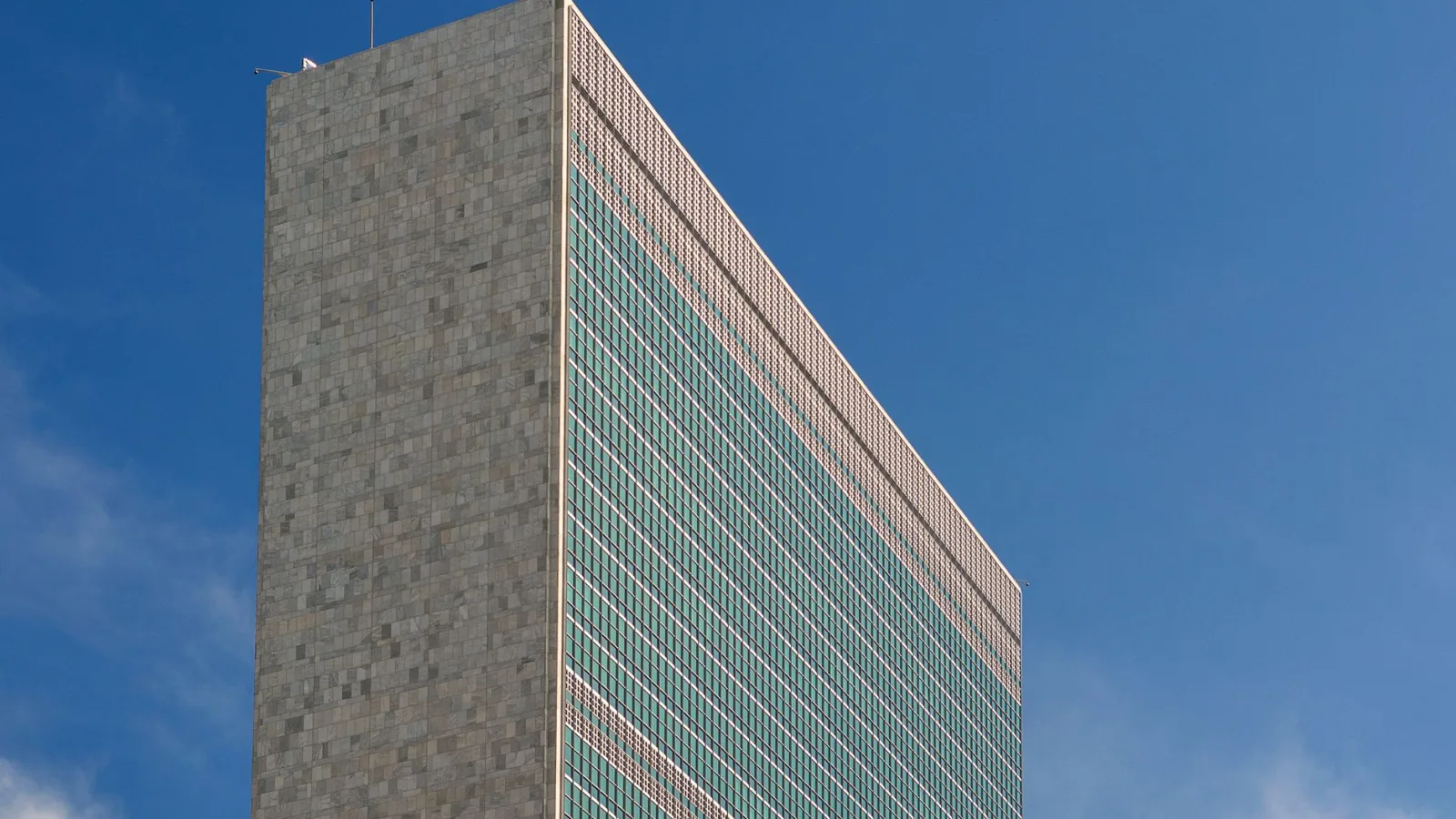
US and Iranian officials have held their first direct talks since June, mediated by Qatar at the UN in New York, on a day when US President Donald Trump publicly threatened to "annihilate" the Islamic Republic if a conflict resolution remained elusive.
No immediate breakthrough was reported following the discussions, which involved Iran's Foreign Minister Abbas Araghchi and US President Donald Trump's envoy Steve Witkoff. The meeting marks the first engagement between the two nations since a ceasefire agreement collapsed in June.
Mr Witkoff stated that a round of discussions had been completed "that we hope will prove constructive and promising." He later confirmed on X that the talks were held "through the mediators, who shuttled between the two sides throughout the day," adding that they had "successfully completed a round of discussions that we hope will prove constructive and promising" and that "The mediators will continue their work."
Iranian state TV confirmed the meeting, with Foreign Minister Araghchi reportedly engaging with Mr Witkoff via the Qatari mediation. Esmail Baghaei, spokesman for the Iranian foreign ministry, quoted by state broadcaster IRNA, indicated that negotiations had taken place through this Qatari intermediary. Mr Baghaei relayed Tehran's conditions, which included an immediate end to the war on all fronts and a cessation of US "acts of aggression."
The diplomatic engagement unfolded amidst heightened tensions and a prolonged period of military exchanges. The current conflict escalated following US and Israeli air strikes on Iran on 28 February. Iran retaliated by attacking Israel and US bases in the Gulf, as well as several Arab Gulf allies of the US. Furthermore, Iran blocked the Strait of Hormuz, a critical maritime chokepoint through which approximately 20% of the world's oil and liquefied natural gas (LNG) transited before the conflict. Its closure has since led to significant global price fluctuations for these commodities.
The ongoing disruption in the Strait of Hormuz has intensified pressure on President Trump to secure a resolution, particularly as the US approaches its Congressional elections in November.
During his address at the annual meeting of the UN General Assembly in New York on Tuesday, President Trump began by highlighting perceived accomplishments in the US economy, immigration, border security, and efforts to combat violent crime. These remarks were largely seen as being tailored to a domestic audience ahead of the US midterms, rather than primarily addressing the international diplomatic community.
He dedicated a significant portion of his speech to defending the conflict with Iran, presenting a stark contrast to earlier statements from UN Secretary General António Guterres, who had cautioned against deepening global divisions and stressed the "interdependence" of nations.
The US President asserted that the conflict had prevented Tehran from acquiring a nuclear weapon, advocating for a foreign policy he described as "peace through strength," which he defined as ultimatums rather than traditional deal-making or compromise.
In a direct challenge, President Trump questioned the future path: "Will a deal be made with Iran that lets them rebuild and create a far greater country than it ever was before? Or do I annihilate the Islamic Republic and do it quickly, never giving them a chance to kill and destroy people and countries again? Do I drive them into hell?"
President Trump later told reporters that American officials had conducted a "very productive" three-hour meeting with the Iranian delegation on the sidelines of the General Assembly. He also expressed his belief that an elusive deal with Iran would materialise immediately after the November elections. These comments were seen as reflecting his strategy of "coercive diplomacy," which involves threatening overwhelming force while simultaneously keeping avenues for negotiation open.
Since the June ceasefire collapsed, both nations have intermittently exchanged fire. Iran has reported attacking vessels it alleges attempted to cross the Strait of Hormuz without authorisation, while the US has targeted Iranian sites within the strait and Iranian tankers off the country's coast. The US has also maintained a blockade of Iranian ports, which has caused considerable disruption to the Iranian economy.
In an effort to compel Tehran to agree to an end to the conflict, President Trump has also threatened to impose sanctions against any country that continues to trade with Iran. However, Iran has not yet shown any indication of altering its stance, maintaining its demand that the US and Israel cease their war, including against the Iran-backed Shia group Hezbollah in Lebanon, which Israel has been attacking.
Regionally, Iran-allied Houthi rebels in Yemen have recently intensified their attacks aimed at disrupting oil shipping from Saudi Arabia, contributing to an escalation of their conflict with the Saudi kingdom. Previously, UN experts have indicated grounds to believe the US committed war crimes in its strikes on Iran, and the G7 nations have urged Iran to stop arming the Houthis in Yemen.