Russian forces launched a large-scale missile and drone attack on Ukraine in the early hours of Thursday, killing at least 12 people and injuring 33 in Kyiv, according to the city's mayor, Vitali Klitschko. Witnesses reported more than a dozen explosions across the capital as air raid sirens sounded through the night.
Ukraine's air force said Russia had launched dozens of ballistic, cruise and hypersonic missiles alongside 168 drones in the assault. Air defence units downed 145 drones and most of the cruise missiles, but none of the ballistic missiles were intercepted. The Kyiv region was the primary target, the air force said in a statement on Telegram.
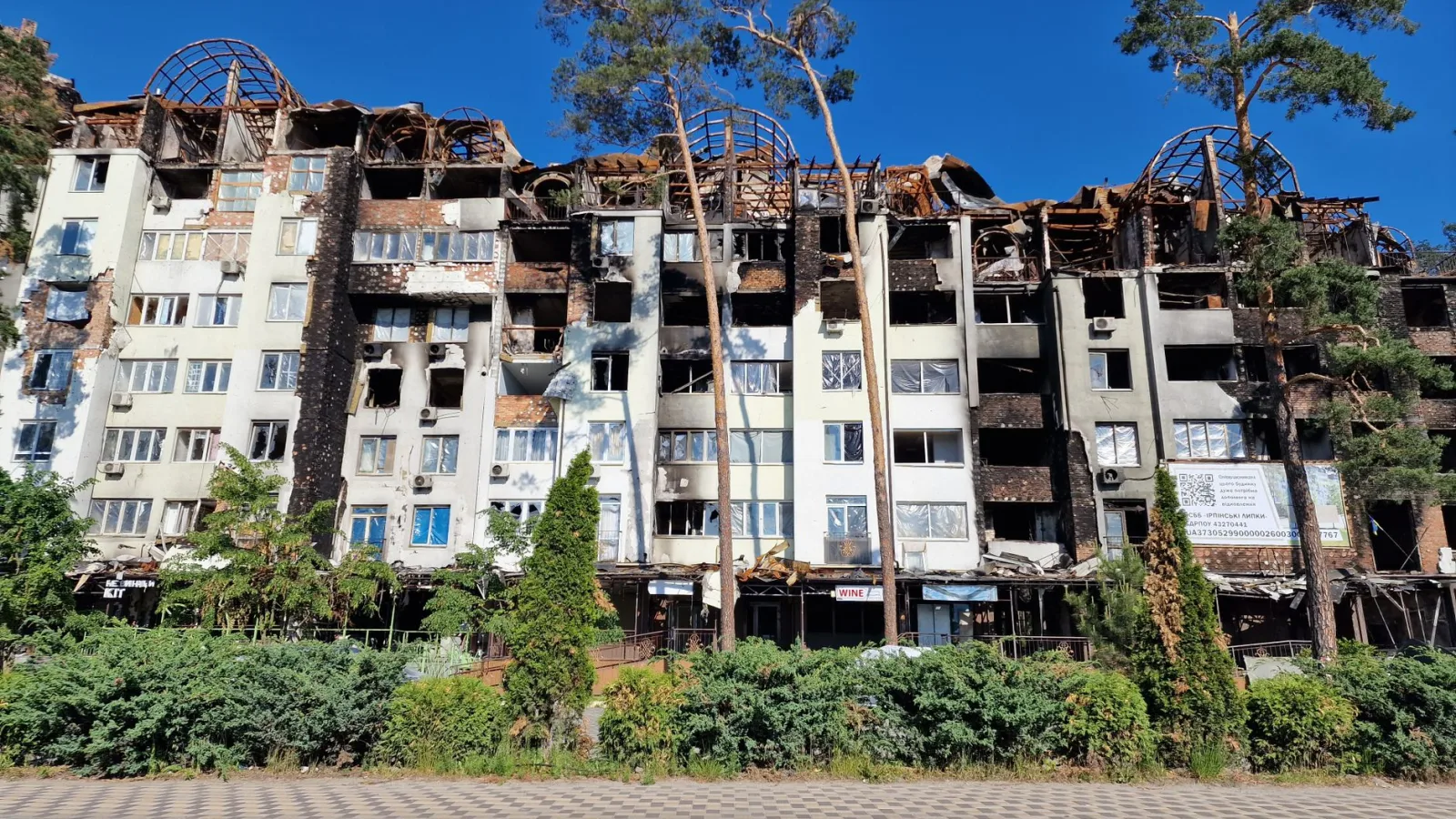
Strikes hit 12 locations across Kyiv's Darnytskyi, Sviatoshynskyi and Solomianskyi districts, damaging residential buildings, a medical facility and an educational institution. Klitschko said a children's hospital had been struck, while people were reported trapped in one destroyed residential building and fires broke out at multiple sites. Emergency crews worked to pull survivors from the rubble, and Ukraine's Emergency Service said the air raid alert remained active into the early morning.
President Volodymyr Zelensky said Russian forces had "been preparing for a long time" for the attack. "It was a massive attack – the Russians had been preparing for a long time, combining different types of ballistic missiles, cruise missiles, and drones, aiming to cause as much damage as possible to civilian infrastructure," he said in his overnight address.
The Russian defence ministry said on Telegram that it had struck facilities producing drone components, a military depot and a logistics hub in Kyiv and the surrounding region.
Poland said it was activating a range of defensive measures in response to the strikes unfolding across its border with Ukraine, describing the action as "preventive military aviation operations". Separately, Romania's defence ministry said a drone had crashed into an uninhabited area of Tulcea county during the Russian attack on Ukraine.
The Russian-controlled Zaporizhzhia nuclear power plant, Europe's largest with six reactors, switched to emergency diesel generators after damage to a high-voltage line caused it to lose external power, plant management said. The facility produces no electricity itself but relies on external power links to keep nuclear fuel cool. The Moscow-installed management said radiation levels remained normal and that all necessary measures were being taken to maintain the safe condition of the power units. It was not immediately clear whether the outage was linked to the overnight barrage.
Electricity was also temporarily shut off in Sevastopol, the largest city in Russian-annexed Crimea, according to Moscow-installed governor Mikhail Razvozhayev, who said the outage was needed to relieve pressure on power grids elsewhere and prevent a wider blackout. The cut was expected to last a few hours.
The attack came hours after President Vladimir Putin acknowledged that Ukrainian strikes were inflicting damage on Russia, in remarks to a conference of ministers and business leaders on Wednesday. "Of course, such attacks have not caused, and could not cause, critical consequences. However, they do inflict damage; this is obvious, and we fully understand and acknowledge it," he said. Ukraine has intensified long-range strikes on Russian energy infrastructure in recent months, and analysts say Moscow has stepped up ballistic missile attacks on Kyiv partly to deplete Ukraine's limited stocks of interceptors capable of countering such threats, as supplies of missiles for its US-made Patriot air defence systems remain constrained.
In a separate development, North Korea's Kim Yo Jong, sister of leader Kim Jong Un and a senior official in the ruling party, rejected a claim by Zelensky that Pyongyang plans to send up to 50,000 additional troops to fight alongside Russian forces. In a statement carried by state media outlet KCNA, she described the Ukrainian leader's estimate as "groundless" and "a self-staged incident", and said responsibility for the war and its continuation lay entirely with the United States and the West. Zelensky made the claim in a post on X earlier this month, in which he also called on South Korea to bolster support for Ukraine's air defences. North Korea sent an estimated 14,000 soldiers to Russia's Kursk region in 2024 under a comprehensive strategic partnership treaty signed during Putin's visit to Pyongyang in June that year.
Meanwhile, Ukraine's parliament approved the appointment of Yevhenii Khmara as the country's new defence minister. Zelensky had nominated Khmara, a former senior special forces operative, after previously naming him acting minister following the removal of Mykhailo Fedorov in July. The appointment was backed by 312 lawmakers, comfortably clearing the 226 votes required for a majority. Khmara takes on the defence portfolio at a sensitive moment for Zelensky, who has faced weeks of political unrest following his dismissal of the 35-year-old reformer Fedorov.