
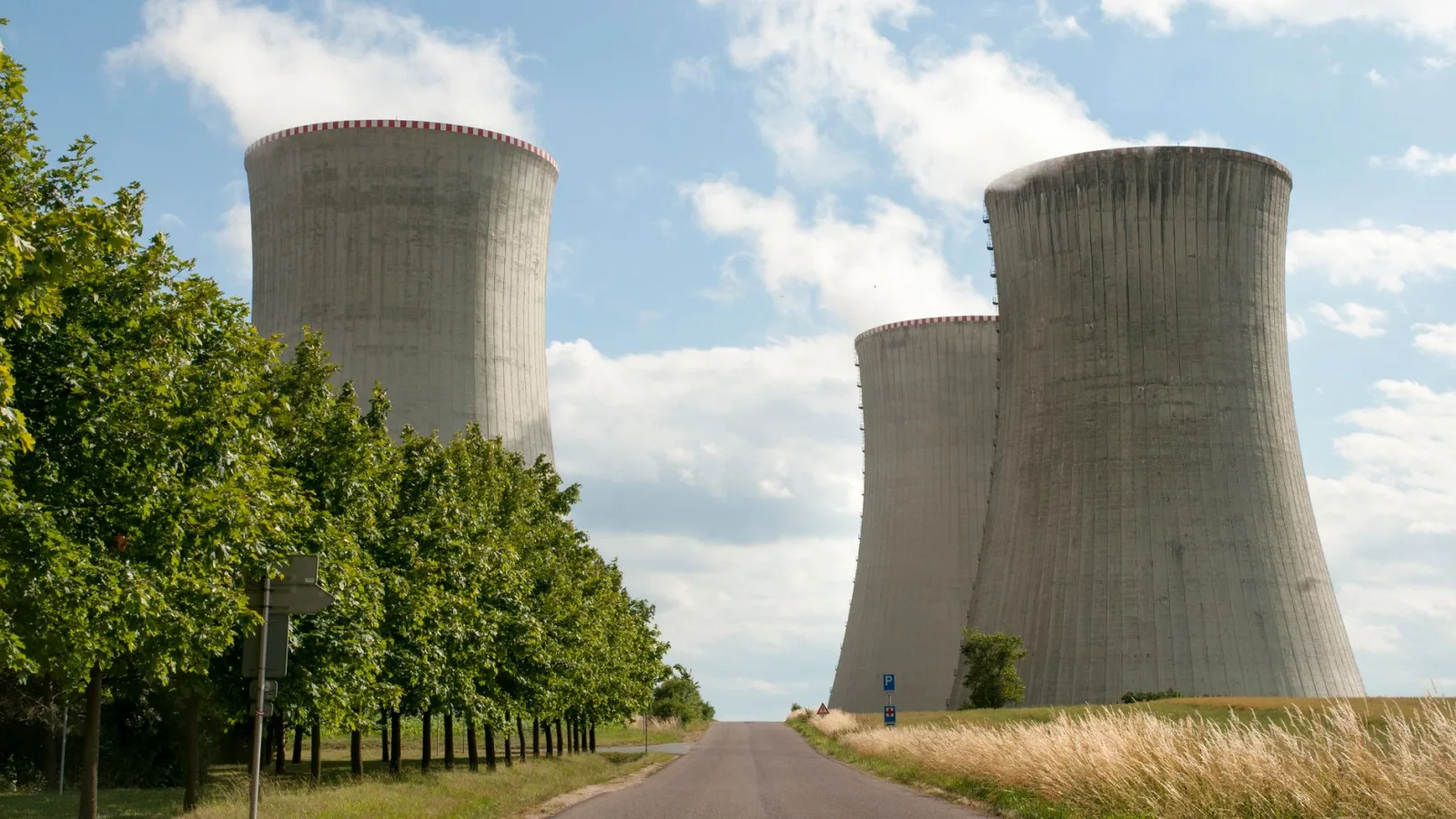
Hungary is preparing to shut down its only nuclear power plant after exceptionally low water levels on the Danube left the facility unable to draw enough river water for cooling, Prime Minister Péter Magyar has said.
The Paks nuclear power station, a Soviet-era plant that remains central to Hungary’s electricity supply, relies on the Danube for cooling water. According to Magyar, the river has fallen so far that the plant’s intake equipment can no longer reach sufficient water, forcing a full shutdown for the first time because of low river levels.
The announcement adds an energy supply dimension to a wider drought affecting central and south-eastern Europe. Hungary, like several neighbouring countries, has experienced weeks of high temperatures and limited rainfall. Forecasts cited by officials indicate temperatures of about 37C for several days, increasing electricity demand for cooling at the same time as generation capacity is being constrained.
Magyar warned that Hungary’s energy position could become “critical” from Monday if the Paks outage coincides with peak demand during the heatwave. He asked households and businesses to reduce heavy electricity use between 17:00 and 22:00, including charging electric vehicles and operating air conditioning equipment where possible.
The government is also preparing contingency measures. Magyar said a rotational shutdown regime could be introduced if voluntary savings and other balancing measures are not enough to protect the national grid. Authorities are expected to draw up a list of large electricity and water users whose consumption could be restricted if the situation worsens.
Paks is important to Hungary because nuclear power provides a stable baseload source of electricity. A forced closure therefore creates a challenge for grid operators, particularly during summer heat when cooling demand is high and hydropower, thermal power and river transport can all be affected by drought. The episode also highlights the dependence of major energy infrastructure on water availability, a factor becoming more prominent in European planning.
The low Danube levels are not confined to Hungary. River gauges in several countries, including Serbia, Romania and Bulgaria, have recorded levels far below seasonal norms. Large sections of exposed riverbed have appeared in Budapest and elsewhere along the river after prolonged dry conditions.
Romania is facing similar pressure at the Cernavoda nuclear power plant, which normally provides about one fifth of the country’s electricity. One of its two 706 megawatt reactors was shut earlier this week because of low Danube levels. State-owned operator Nuclearelectrica has been trying to avoid closing the second reactor, according to reports from Romania. If both units are offline, Romania would also temporarily lose nuclear generation.
Romanian hydrological data illustrate the scale of the decline. The National Institute of Hydrology has said the average July flow where the Danube enters Romania is about 4,700 cubic metres a second. This week, the level was reported at around 1,600 cubic metres a second, with a further fall forecast.
The Danube is one of Europe’s main transport and economic corridors, running for 2,857 kilometres through or along 19 countries before reaching the Black Sea. Its upper section flows from Germany towards Bratislava, the middle basin passes through central Europe and the Balkans, and the lower river runs through Romania and Bulgaria into the Danube Delta.
Low water has already disrupted shipping. In Bulgaria, river traffic has largely stopped in affected areas, while border police evacuated 186 passengers from a river cruise vessel that ran aground near Vidin, close to the Romanian border. Local authorities said passengers had been short of food and water after the ship was unable to dock and another vessel could not get close enough to assist.
Other waterways linked to the Danube are also under strain. In Serbia, the Sava and Tisa rivers, both Danube tributaries, have recorded very low levels. Serbian hydrologist Dejan Vladiković told local broadcaster N1 that the present conditions reflected not only recent heat but also insufficient spring rainfall, and that a significant improvement was not expected before mid-September.
The drought has also exposed historic objects and natural remains along the riverbed. Reports from Croatia, Serbia and Bulgaria have described the appearance of a sunken cargo vessel, wartime shipwrecks and bones later assessed by experts as mammoth remains. Such discoveries underline the extent to which water levels have receded, though the more immediate concern for governments remains energy, navigation and water management.
Climate scientists have repeatedly warned that Europe is warming faster than the global average. The Copernicus climate service has said the continent is heating at roughly twice the global rate, increasing the likelihood of more frequent heatwaves, stress on water systems and conditions favourable to wildfires. Forecasters have warned of expanding fire risk in parts of central and southern Europe, with Greece and Turkey among the countries facing severe conditions.
For Hungary and its neighbours, the immediate task is to manage power supply, river transport and public demand through the current heatwave. The shutdown at Paks shows how prolonged drought can affect infrastructure beyond agriculture and water supply, placing pressure on energy systems that depend on predictable river flows.