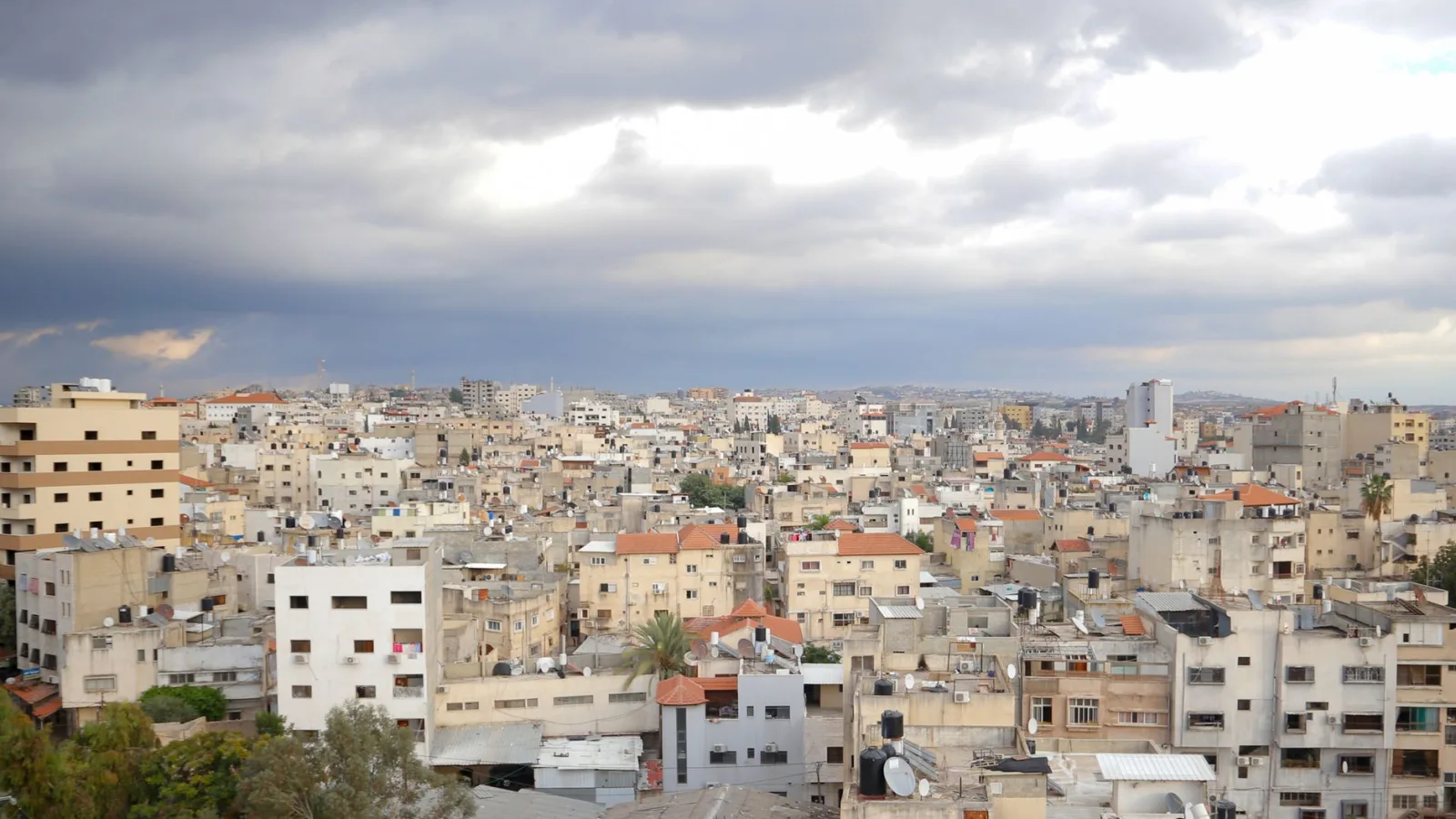
Dozens of Palestinian residents in the village of Qusra, in the occupied West Bank, were instructed to vacate their homes during an Israeli military operation aimed at removing Israeli settlers from the area.
The operation followed a period since Sunday where Israeli settlers had reportedly besieged residents in three houses, cutting off essential power and water supplies.
Qusra Mayor Abdel Azim Wadi informed the BBC that the village had been declared a closed military zone, with Israeli forces reportedly using some of the vacated Palestinian homes as temporary barracks. The Israeli military stated its objective was "to protect the residents" and confirmed it had "dismantled two illegal outposts," detaining one Israeli and confiscating equipment on the outskirts of Qusra and Jalud, near Nablus.
A spokesman for the Israeli government, David Mencer, described the settlers' actions as "deplorable" and "unacceptable," vowing that the government would investigate, arrest, and prosecute those responsible. "The Israeli army is acting against it, and we are investigating it and we will arrest those responsible and we will prosecute them," Mr Mencer said.
The residents of two of the three besieged homes, belonging to the Abu Ridi and Hassan families, told the BBC they were told to leave on Thursday and subsequently moved into the third house. Elsewhere in Qusra, residents of 11 other houses were also ordered to leave by the army.
Footage shared from Qusra overnight into Thursday showed approximately a dozen Israeli security vehicles, including a bulldozer, entering the village. Later daytime footage depicted a long line of Israeli security forces on the road leading to the Palestinian village.
Qaher Odeh, one of those asked to vacate his home, recounted how more than 20 soldiers entered his house on Thursday morning. "I was asleep in the morning, my brother and I. They came in and broke down the door, shouting open up, open the door. Even now I still can't process what I saw in front of me. There was more than 20 of them, maybe 30," he told the BBC. Mr Odeh added that "There were people being forced out of their homes. A lot of people."
Some families were permitted to return to their homes after about 10 hours, only to discover their properties upturned. One man alleged that soldiers had thrown out all the food from his fridge and stolen $1,500 (£1,112) in cash. The Israel Defense Forces (IDF) did not address these specific allegations when questioned by the BBC.
The IDF stated that "the soldiers were instructed that the Qusra residents will remain in their homes," adding that soldiers would not operate inside the Palestinian home that had been subject to the settler's siege. It further stressed that Israeli "liaison officers are in ongoing contact with Qusra's local leadership and are working to avoid disruption to the daily lives of the residents in the area."
However, Qusay Abu Ridi, a member of one of the trapped Palestinian families, reported that his house had been attacked again overnight and that some settlers remained in the area, reportedly hiding from the army. His brother, a Palestinian-American businessman who owns the property, has lodged a complaint with the US embassy.
US Ambassador Mike Huckabee, a long-standing supporter of settlements, condemned the settler intimidation of the Qusra families, describing it as "a horrific act of terror." He posted on X: "Actions by those who carried out this horrific act of terror meant to intimidate and harass this family are disgusting. No excuse for such thuggish behavior."
The situation in Qusra originated on Sunday when settlers blocked the road to Palestinian family gates and cut off power and water. Initial reports indicated that the first Israeli soldiers to arrive at the scene prayed with the settlers, an act for which the Israeli military later stated they would be disciplined. The Abu Ridi and Hassan families had made appeals for assistance on social media after their services were cut.
An attempt by Israeli security forces on Wednesday to dislodge the settlers resulted in confrontations with a larger group. Palestinian security camera footage shared with the BBC showed clashes between Israeli soldiers, border police, and a crowd of settlers, with security forces employing tear gas and stun grenades. Other footage appeared to show Israeli forces confiscating a canopy used by the settlers for shelter.
The exact motivations of the settlers in Qusra are not clear, although in the past, settlers have forcibly displaced Palestinians from their homes and seized properties. The stated aim of some settlers is to empty the area of its Palestinian residents.
All Israeli settlements in the occupied territories are considered illegal under international law. Nevertheless, the current Israeli government has reportedly promoted their rapid expansion, which observers say has contributed to a dramatic rise in settler violence as they seek to drive Palestinians from their land.
The Qusra incident is the latest in a series drawing attention to what critics describe as the relative impunity of settlers and the challenges faced by Israeli forces in managing escalating settler violence.
Qusra's mayor had previously highlighted "a clear and sustained pattern of targeting Qusra." Last month, a newly completed mosque in the village was reportedly set on fire, with Hebrew graffiti sprayed nearby. This followed an incident in the Palestinian village of Tal, which led to an escalation resulting in the deaths of four Palestinians and two Israeli soldiers. In July, settlers surrounded a Palestinian home in the village of Jalud, near Qusra, for over two weeks, leading to the owners fleeing and settlers subsequently occupying the property.
According to UN figures, 76 Palestinians, including 18 children, have been killed in the West Bank this year by either Israeli forces or settlers. In the same period, three Israelis, including one civilian, were killed in confrontations with Palestinians or in an alleged ramming attack by a Palestinian in the West Bank.
The UN also reports that since January 2023, 127 Palestinian communities in the West Bank have experienced full or partial displacement, affecting more than 6,390 Palestinians, with 47 communities entirely displaced. It registered that in 2023, approximately 3,800 Palestinians, nearly half of them children, have been displaced due to settler violence, demolitions, and evictions.
Speaking at a UN meeting, Israel's Ambassador to the UN, Danny Danon, dismissed the notion that settlements were an obstacle to peace. He asserted that settlements would remain and continue to grow, citing Israel's "biblical, historic and legal rights" to the land. Ambassador Danon told the Security Council that "we are not going anywhere."