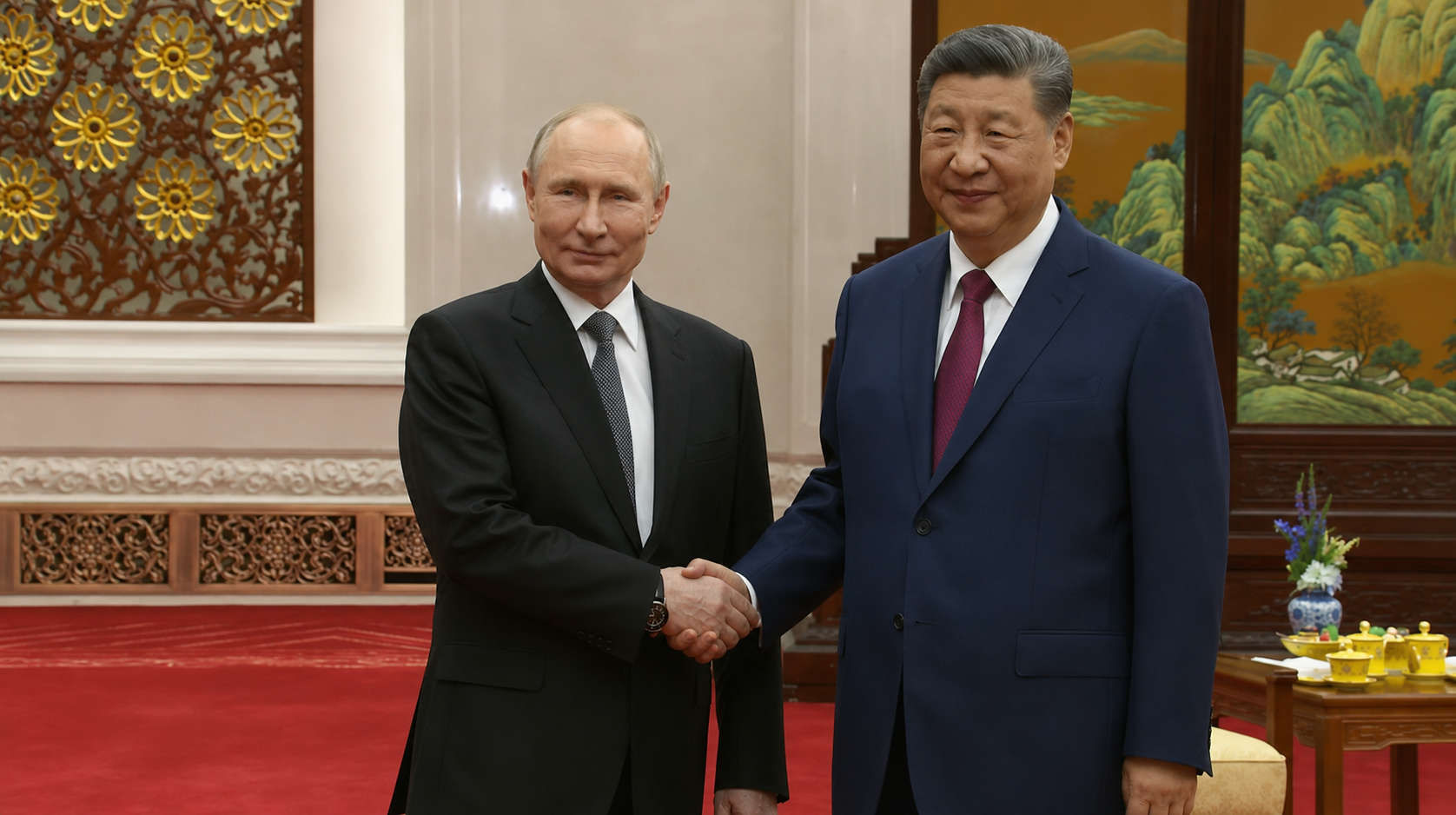
China’s President Xi Jinping hosted Russia’s President Vladimir Putin in Beijing for talks that featured an informal tea meeting, underscoring the steady pace of top level contact between the two leaders and their governments. The visit placed attention on trade, energy, and strategic coordination as Beijing and Moscow continue to deepen ties while managing pressure from Western sanctions and the ongoing war in Ukraine. The leaders highlighted continuity in a partnership that both sides describe as comprehensive and long term, a message reinforced by Xi’s recurring use of tea settings to signal warmth and familiarity with visiting heads of state.
The engagement fits a pattern since 2022, when the two governments issued a joint statement saying their friendship had “no limits.” While each side manages its own priorities, the Beijing meeting reaffirmed a shared focus on economic links and diplomatic alignment. The optics of tea and extended conversation added a personal layer to formal talks, echoing earlier summits in Beijing and Moscow over the past three years.
When and where: The leaders met in Beijing in mid May 2026.
Tea diplomacy returns to the front of the stage
Xi’s practice of hosting visiting leaders for tea has become a hallmark of his personal diplomacy. State visits and working meetings often include a session away from formal conference tables, with tea served in garden courtyards or heritage settings. The approach aims to create space for unhurried discussion and public images of familiarity. Xi has used similar formats with a range of visiting leaders including European officials, Middle Eastern leaders, and regional partners from Asia. In Putin’s case, the tea meeting carried added symbolism because it followed another round of formal bilateral talks centred on trade flows, energy cooperation, and geopolitical coordination.
Chinese state media presented the discussions as friendly and productive, with images focusing on calm surroundings, conversation, and ceremonial hospitality. Russian outlets also highlighted the relaxed format, portraying the meeting as evidence of strong personal relations between the two presidents at a time of heightened global tension. Analysts noted that the informal setting helps both governments project stability and continuity despite growing friction with the United States and its allies.
Trade and energy remain central pillars
Economic cooperation remained a major focus of the Beijing talks. China has become Russia’s largest trading partner since Western sanctions reshaped Moscow’s access to European markets following the invasion of Ukraine. Bilateral trade has expanded sharply through increased purchases of Russian oil, gas, coal, agricultural goods, and industrial materials, while Chinese manufacturers continue supplying machinery, vehicles, electronics, and consumer products into the Russian market.
Energy links continue to deepen through pipeline agreements and long term supply contracts. Russian exports of crude oil and natural gas to China have helped offset reduced sales to parts of Europe, while Beijing benefits from diversified energy sources and discounted supplies. Officials from both countries have also discussed further development of cross border transport routes and financial systems designed to reduce reliance on Western controlled payment networks.
The leaders reportedly reviewed progress on infrastructure and logistics projects tied to Eurasian trade corridors. Rail routes connecting China and Russia have carried rising cargo volumes since 2022, while Arctic shipping routes and regional energy projects remain areas of shared interest. Both governments see these links as important to long term economic resilience under an increasingly fragmented global trading system.
Strategic coordination amid international pressure
The Beijing meeting also took place against the backdrop of wider geopolitical tensions involving NATO, the war in Ukraine, sanctions policy, and competition between China and the United States. While China continues to present itself publicly as neutral on the Ukraine conflict, Western governments have repeatedly accused Beijing of providing economic support that helps sustain Russia’s wartime economy.
Chinese officials maintain that trade with Russia remains lawful and that Beijing supports dialogue and diplomatic solutions. Moscow, meanwhile, continues to value China as a major political and economic partner while facing restrictions from Europe, the United States, and other allies. Joint statements from both governments often stress support for a “multipolar world order” and opposition to what they describe as unilateral sanctions and Western dominance in global affairs.
The timing of the summit also drew attention because it followed recent international diplomatic activity involving Washington and Asian partners. Observers noted that Beijing may view visible engagement with Moscow as a way to signal that China retains strategic flexibility and influence despite ongoing tensions with the West.
Personal diplomacy and political messaging
Xi’s use of tea diplomacy has become closely associated with his leadership style. Unlike highly structured summit meetings dominated by formal speeches and briefing documents, tea sessions allow leaders to appear more relaxed and approachable. Chinese officials often use the format to reinforce themes of continuity, cultural tradition, and long term partnership.
For Putin, the meeting offered another opportunity to demonstrate that Russia is not diplomatically isolated despite sanctions and political pressure from Western governments. Public images of the two leaders in discussion serve both domestic and international messaging purposes, particularly as Russia seeks to show that major powers outside the West continue engaging with Moscow at the highest level.
Analysts said the symbolism surrounding the visit may prove almost as important as any specific agreements announced during the talks. The combination of formal meetings and informal tea discussions reflected an effort by both governments to emphasise trust, continuity, and strategic alignment during a period of uncertainty in global politics and trade.
Officials from both countries said dialogue between Beijing and Moscow would continue across economic, diplomatic, and security channels in the months ahead, with further meetings expected through regional forums and bilateral exchanges later in 2026.