United States officials said talks on restoring commercial shipping through the Strait of Hormuz had made progress, as oil prices fell on expectations that disruption in one of the world’s most important energy routes could ease within days.
President Donald Trump told Fox News that the waterway would reopen “very soon” and warned that Iran would be “hit very hard” if it did not. His comments followed public remarks by Secretary of State Marco Rubio and Treasury Secretary Scott Bessent, who both indicated that negotiations involving Iran and Oman had advanced, although no agreement had been announced.
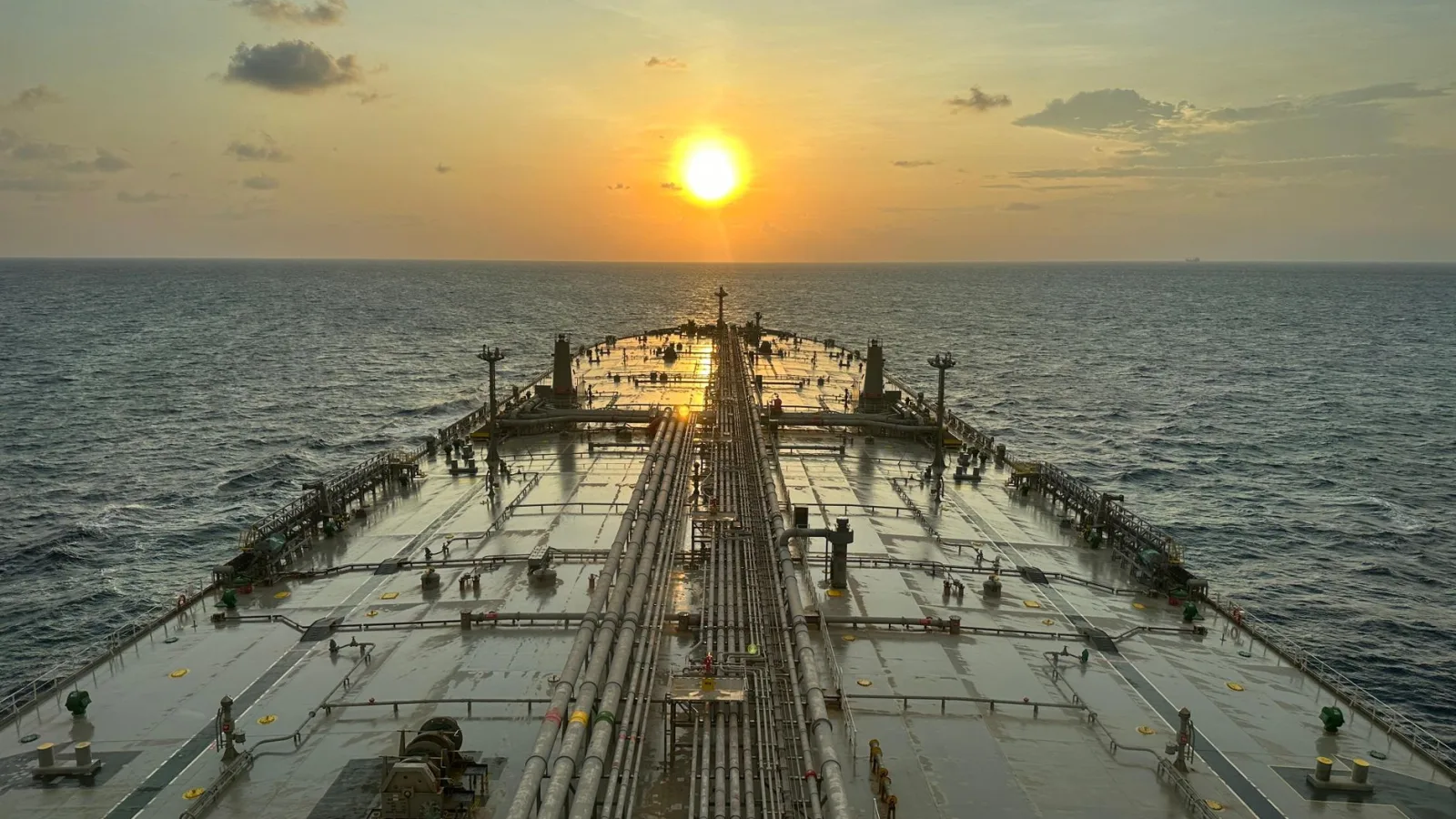
The Strait of Hormuz, a narrow passage between Iran and Oman, is a critical route for oil and liquefied natural gas exports from the Gulf. Before the current conflict began in late February, about a fifth of global daily oil and LNG supplies passed through the waterway, making any interruption a matter of immediate concern for energy markets and importing economies.
Brent crude, the international benchmark, fell by almost 5 per cent on Tuesday to below $80 a barrel after the latest diplomatic signals. Prices continued to edge lower in Asian trading on Wednesday. US West Texas Intermediate also dropped by more than 5 per cent to about $76 a barrel, with both contracts reaching their lowest levels since 13 July.
Mr Trump, speaking during a visit to California, said Washington was holding “very good discussions” and asserted that Iran wanted an agreement. The statement was consistent with a broader effort by US officials to present the talks as close to producing a practical arrangement for maritime traffic, although the scope and terms of any possible deal remain unclear.
Mr Rubio told reporters at the State Department that discussions on enabling more vessels to move through the strait had progressed, but had not reached a conclusion. “There’s been progress made in those talks, but not finality yet,” he said, adding that Washington hoped for movement “very shortly”.
Mr Bessent told CNBC that an arrangement could come as soon as Wednesday or Thursday. Asked whether Iran would be permitted to charge ships for passage, he said the objective would be “freedom of movement”. He did not provide details on enforcement, monitoring or the role of regional intermediaries.
Iran has disputed the suggestion that it is negotiating directly with Washington. Its foreign ministry has said Tehran is speaking with Oman, which has often served as a diplomatic channel between Iran and Western governments. A ministry spokesman said discussions with Muscat on a new mechanism for vessels transiting the strait had been positive.
Qatar, another state with a significant mediation role between Washington and Tehran, said it was continuing to work with other mediators towards a diplomatic resolution, while acknowledging that no direct talks were currently planned. The parallel accounts underline the sensitivity of the negotiations and the political limits facing both sides.
US Central Command said the southern route through the Strait of Hormuz remained open for commercial vessels using the international waterway. The statement appeared intended to reassure shipping operators and energy markets, though the wider security environment in the Gulf and nearby waters remains unsettled.
Since the start of the conflict, Iran has halted most traffic through the strait, while the United States has imposed a naval blockade of Iranian ports in the region. The disruption has altered shipping patterns and increased the cost of moving energy cargoes through the Middle East.
Pressure on alternative routes has also increased. Yemen’s Iran-backed Houthi movement has imposed a blockade on Saudi ports in the Red Sea since 20 July, according to the source material, affecting a route that had become more important after access through Hormuz was restricted. Recent attacks on vessels in the area have added to concerns among shipowners and insurers.
India’s shipping minister said on Tuesday that a projectile had sunk an Indian-flagged vessel near Yemeni waters, with all 14 people on board rescued. Analysts cited in market reporting have said the risks facing oil tankers in the Middle East are now at their most serious level since the Iran war began.
The conflict has also placed strain on US military supplies. CBS News, citing two sources with direct knowledge of the matter, reported that the United States had used nearly all of its global stockpile of long-range precision missiles during the conflict. The report has not been publicly detailed by US defence officials.
Energy markets have been highly reactive to each round of escalation and diplomacy. Oil prices have risen above $120 a barrel during periods of heightened military risk and fallen sharply when negotiations appeared to be moving towards a breakthrough. Previous attempts to de-escalate have not produced lasting arrangements, contributing to continued volatility.
Fuel costs have already affected consumers in several major economies. In the United Kingdom, the RAC motoring group said the average price of petrol had reached £1.60 a litre, close to levels seen at the start of the conflict. In the United States, AAA data showed average petrol prices above $4 a gallon, while diesel was near $5.40 a gallon.
Danni Hewson, head of financial analysis at AJ Bell, said investors remained cautious because earlier moments of apparent progress had not led to durable settlements. She said market participants were aware of how fragile efforts to secure agreements had been during the war.
The diplomatic focus now rests on whether indirect discussions can produce a mechanism that shipping companies, regional governments and military authorities regard as workable. Any agreement would need to address access, security guarantees and the practical management of vessels moving through a narrow and strategically sensitive waterway.
For now, the fall in oil prices reflects expectations rather than a confirmed settlement. With Iran denying direct talks with the United States and mediators still working through proposals, the Strait of Hormuz remains both a central point in the conflict and a test of whether limited diplomatic arrangements can reduce pressure on global energy supply.