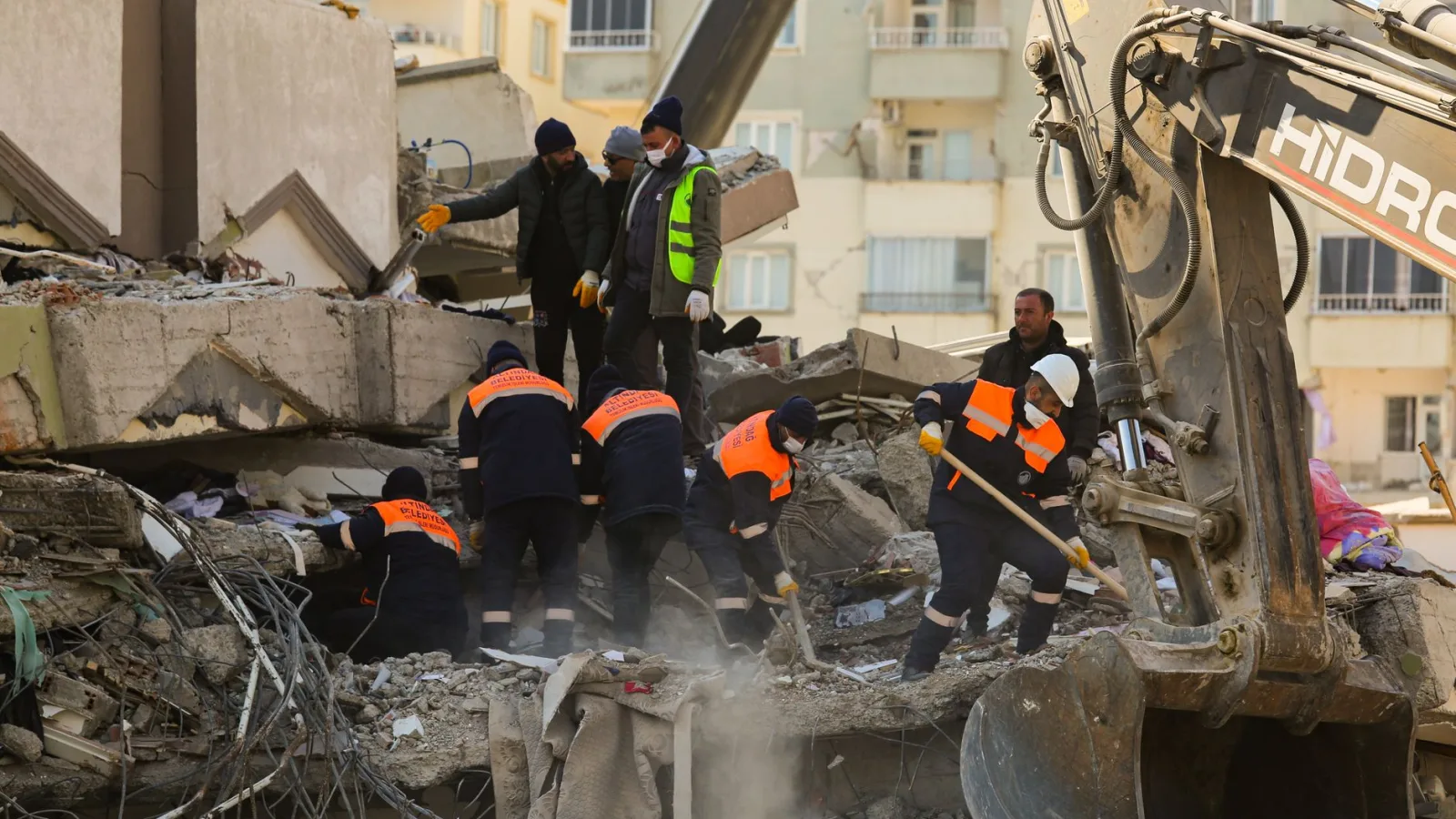
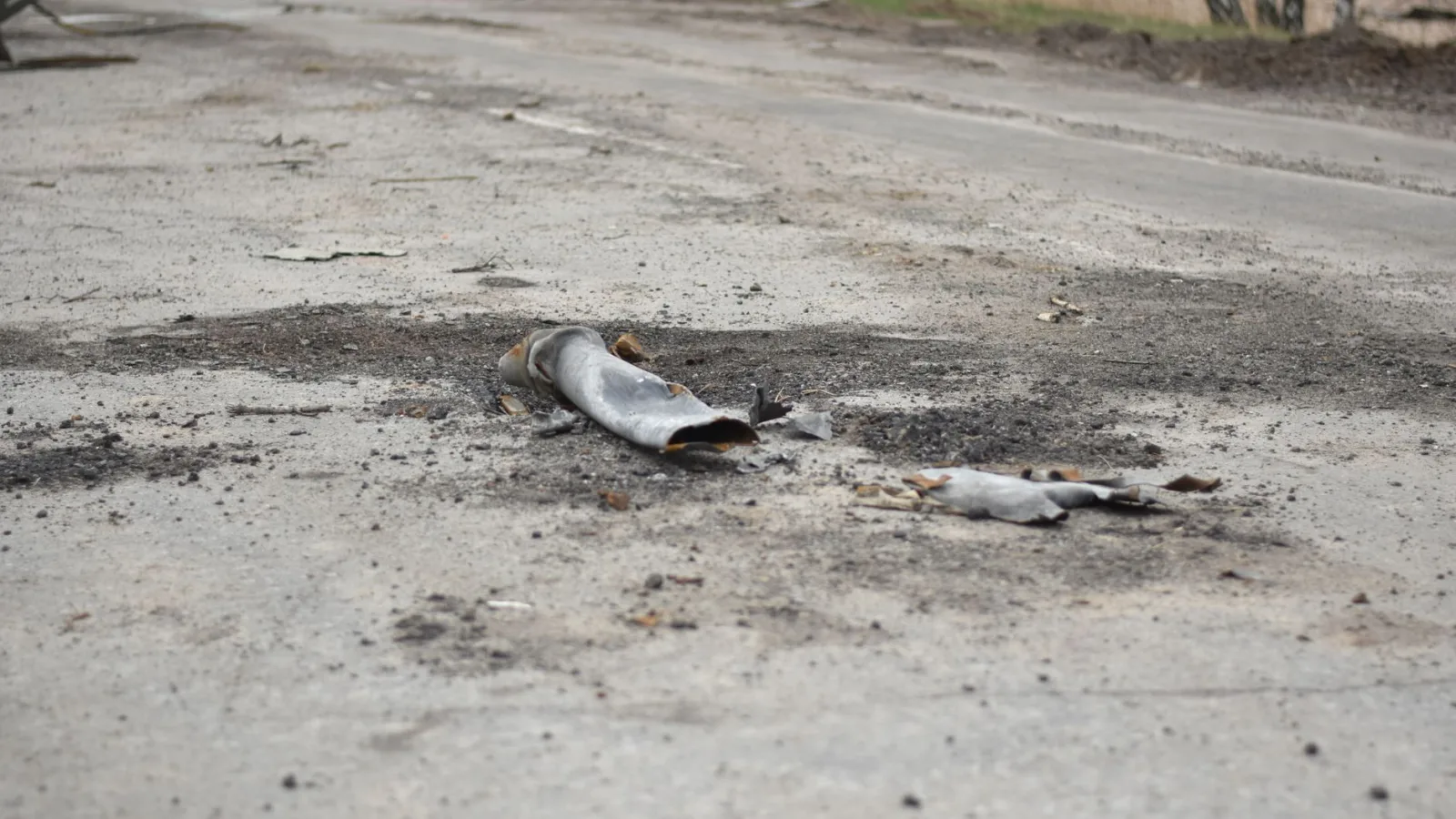
Leaked images obtained by CBS, the BBC's US partner, reportedly show widespread damage to multiple United States military sites across the Middle East resulting from Iranian strikes. The release of these undated photographs follows a report from the Pentagon's watchdog confirming hundreds of structures at US bases were damaged or destroyed by Iran during the ongoing conflict.
The photos, reportedly provided by active military personnel, depict a range of damage including a severed radar jet, flattened trailers, and severely compromised buildings. Locations identified include US bases and sites in Saudi Arabia and Kuwait.
One military member, whose identity was not disclosed by CBS, commented on the situation, stating: "This is major damage to our bases that hasn't been communicated to the American public. We're standing there with our eyes closed getting punched in the face."
Among the most striking images is one showing a Boeing E-3 Sentry aircraft at Prince Sultan Air Force Base in Saudi Arabia, approximately 62 miles (100km) south-east of Riyadh, which appears to have been ripped in half. Its tail section is crumpled into a tangled mass of metal. While the specific photo is undated, BBC Verify had previously confirmed a similar image of the same radar aircraft in March.
Boeing E-3 Awacs aircraft are critical assets used for detecting and tracking potential targets over long ranges, providing early warning of threats. In March, a US official informed Reuters that an Iranian attack on Prince Sultan Air Base had wounded 12 US personnel, with two sustaining serious injuries.
Further images, reportedly from Camp Buehring in Kuwait, show multiple crumpled trailers and a large tent-like structure reduced to shreds, with smoke billowing from the site. Another photograph from Camp Arifjan, also in Kuwait, illustrates damage to a four-storey building. Damage at Camp Arifjan, including to satellite communications hardware, was reported in March, though it remains unclear if this image relates to the same incident.
The public release of these images follows closely on a report from the Pentagon's watchdog, which documented significant losses across the region. This report detailed that Iranian strikes "damaged and destroyed hundreds of buildings and structures at US bases in Kuwait, Bahrain, Qatar, UAE, Saudi Arabia, Iraq, Oman, and Jordan during the conflict."
The financial implications are substantial. The Pentagon watchdog's report noted that equipment losses alone have totalled $3.7 billion (£2.8 billion). The overall cost of the war for the US has reached $33.4 billion (£24.7 billion) up to 29 June.
The report also revealed that "dozens of US aircraft were destroyed or damaged" in the months following the war's commencement. Specific examples included five refuelling aircraft that were "damaged or destroyed on the ground in Saudi Arabia by Iranian munitions."
Separately, a report from the Congressional Budget Office (CBO) highlighted the difficulty in replacing high-value assets. It noted that the E-3 aircraft, such as the one seen damaged, is no longer in production and would require replacement with a more modern equivalent, the E-7. The CBO estimated the cost of a single E-3 aircraft at $500 million (£371 million).
The CBO further stated that the estimated total cost of equipment lost in battle – encompassing planes, drones, and a terminal high altitude area defence system – amounts to $1.9 billion (£1.4 billion). The CBO review, however, was subject to "uncertainty" due to the Department of Defence not responding to its requests for information, necessitating reliance on government databases and public reports. The full extent of planned repairs and rebuilding by the US military also remains undisclosed, according to the report.
Brian Katulis, a former national security official who served under both Democratic and Republican administrations and is now a senior fellow at the Middle East Institute, offered critical analysis of the revealed damage. He contended that the visible destruction demonstrated that "America had not adequately prepared its defences."
Mr Katulis also suggested that there was "strong evidence that US adversaries like China and Russia may have helped Iran in targeting." He added, "The Trump administration has done nothing to address these vulnerabilities."
Commenting on the financial expenditures, Mr Katulis observed that "these costs show how the Trump administration burned through precious military resources without having much to show for it." He argued that the "greater damage had been to broader US military readiness."
He elaborated on the strategic impact, stating: "The United States had to divert military assets from Asia to the Middle East, leaving America and its partners in Asia more exposed and vulnerable to China." Furthermore, he warned, "the depletion of US munitions makes Russia more willing to probe vulnerabilities with America's NATO allies and continue its aggressive war against Ukraine."
Mr Katulis acknowledged that the US possesses the financial means to address equipment losses, but cautioned that the nation already faces budgetary problems. This could impede its ability to act swiftly enough to prepare for potential escalations in the Middle East or other global flashpoints.
The White House, when contacted by the BBC regarding the photos and related reports, referred inquiries to US Central Command (Centcom). Centcom did not provide an immediate response to the request for comment. The BBC has not independently verified the newly leaked photos.
The publication of these images coincides with mounting public and political pressure on the White House to resolve the conflict with Iran. The conflict commenced on 28 February when the US and Israel initiated joint attacks on Iran. Since then, Iran has responded with repeated attacks on US bases, allied states in the Gulf, and Israel.
On Tuesday night, the US House of Representatives voted for a third time to end the war in Iran. The measure, which would compel President Donald Trump to cease US military action without congressional approval, passed with support from several Republican members. Its path through the US Senate, which has not indicated whether it will consider the matter, remains uncertain.
The same day, outgoing Republican Congressman Thomas Massie announced plans to attempt to impeach Defence Secretary Pete Hegseth, as new details emerged concerning the financial toll of the Iran war on the US. The Trump administration has publicly backed Mr Hegseth, with US Attorney General Todd Blanche telling reporters he was "doing a phenomenal job."
President Trump has denied any US weapons shortage, asserting that information "leakers" are being "hunted down." This statement follows a Pentagon inspector's confirmation of munitions shortfalls attributed to the Iran war.