
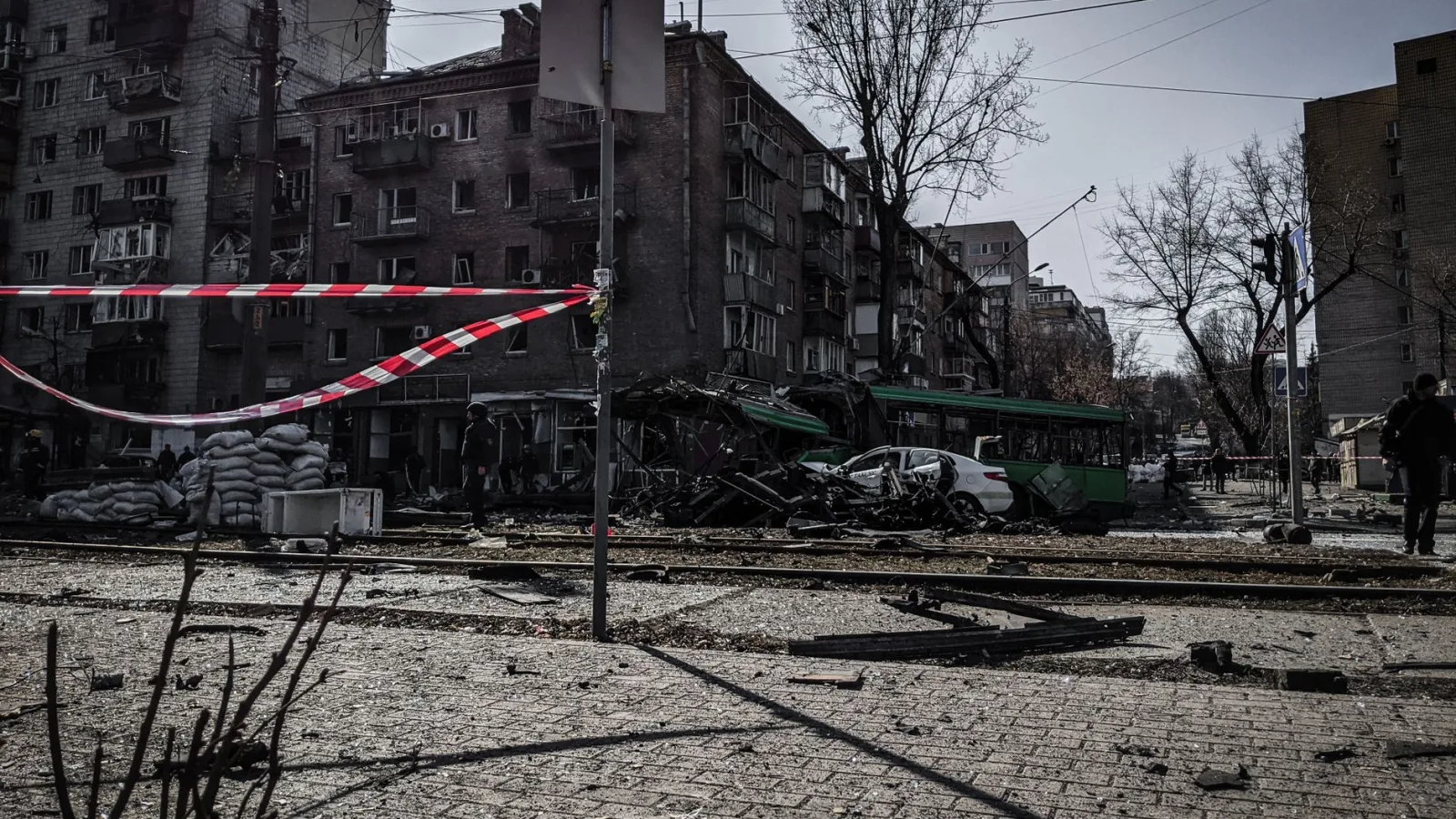
A senior adviser to Ukrainian President Volodymyr Zelenskyy has warned that neither Russia nor Ukraine can achieve a decisive victory in the escalating conflict, with long-range strikes placing civilians and infrastructure at growing risk of mutual destruction.
Serhii Beskrestnov, widely known by his call sign "Flash," who serves as Zelenskyy's defence technology adviser, expressed grave concerns about the upcoming winter in Kyiv, suggesting that elderly residents might need to be evacuated if Russian bombardments target the capital's energy supply.
"Now, this is a war of cities, a war of infrastructure," Beskrestnov told The Guardian, characterising the conflict as fundamentally deadlocked on the frontline. He highlighted that this deadlock has led to increasing risks for civilians living hundreds of miles away from the immediate battle zones.
Beskrestnov emphasised the futility of the current trajectory. "In this war, nobody will win this game, because both countries, after the war, will have destroyed economics, infrastructures. So it’s stupid. We should stop this war. We proposed to Russia to stop this war, but Russia does not want to stop," he stated.
The 51-year-old radio specialist was initially appointed as a technology adviser by former defence minister Mykhailo Fedorov in January, before transitioning to a direct advisory role under President Zelenskyy in July following Fedorov’s dismissal. Beskrestnov himself survived a drone attack on his home in April, underscoring the personal impact of the conflict.
He concurred that "attack had become more powerful than defence," explaining that the air defence systems of both sides are struggling to cope with the sheer volume of available missiles and drones.
Beskrestnov detailed the potential for Russia to launch a sustained bombing campaign against Kyiv's essential services this winter. He warned that Russia is producing high-speed ballistic missiles at a rate exceeding 100 per month, which could be used to target electricity, water, and heating systems. This warning comes after Vladimir Putin stated earlier this week that Russia's military had been "ordered to prepare and carry out mass strikes" on Ukraine’s energy facilities, indicating no intention to de-escalate the conflict.
"For me, it’s horrible," Beskrestnov remarked regarding the prospect. "We are talking about 2 to 3 million people, and Russia understands it can create a disaster in Kyiv." He added that city authorities should consider proactive civilian evacuations, particularly for the elderly, though he stressed that this was not an official statement.
Ukraine faces a critical shortage of US Patriot air defence interceptors, which are the primary weapon capable of countering ballistic missiles. Beskrestnov admitted he was "not sure" if President Zelenskyy could secure enough of these systems from international partners to avert a crisis. Last month, President Zelenskyy had publicly expressed a desire to obtain 300 Patriot interceptors for the winter period.
In response to Russia's offensive capabilities, Beskrestnov predicted an intensification of Ukrainian "deep strikes" into Russian territory, a campaign that has already targeted factories, warehouses, and oil refineries. He disclosed that Ukraine's president has set a target to increase the quantity of these attacks to 1,000 per day, a significant rise from the current daily average of approximately 300.
Addressing President Zelenskyy’s recent announcement of a concerted effort by Ukraine to disrupt civil aviation within Russia using drones, Beskrestnov clarified the strategy. "I think it’s very simple: it’s not necessary for us to attack an airport, it’s just enough for us to fly at the airport and the airport will be closed," he explained, suggesting disruption rather than direct destruction as the primary goal.
Russia, meanwhile, has reportedly advanced its own attack capabilities. Ukrainian investigators concluded that a Molniya drone, which resulted in a fatality near a Zaporizhzhia gas station in July, was likely guided by artificial intelligence rather than traditional radio control. This marks a suspected first use of AI in the conflict.
Beskrestnov expressed apprehension about future developments. "I’m just afraid what happens in the future because I think it’s just a question of time before Russia installs this technology in a Shahed," he said, referring to Russia's standard long-range drone. He warned that such a development could render Ukraine’s "huge jamming network" obsolete by eliminating the need for radio communication, which jamming typically targets.
Ukraine is also developing its own autonomous drones, with a prototype already existing, according to Beskrestnov. However, he believes Russia currently holds an advantage in terms of scale.
Further enhancing its offensive capabilities, Russia has reportedly developed new waves of drones and missiles powered by Chinese-made jet engines. These new platforms can achieve speeds of over 200mph (320km/h), surpassing the speed of Ukraine’s first generation of cheaper Shahed interceptors.
Moscow reportedly deployed 2,500 jet-powered Shahed drones into Ukraine in August, an increase from 1,500 in July. Beskrestnov stated Russia's ambitious production plans, including "about 36,000 in 2027" of jet-powered Shaheds, and a further 30,000 of the slower piston-engine variants next year. These jet-powered Shaheds are already being used to threaten Kyiv and other major cities for extended periods. These will be supplemented by an additional 10,000 cheap Banderol cruise missiles and 10,000 Dan-T missiles during 2027, significantly boosting Russia's capacity to target Ukrainian infrastructure.
While four to six Ukrainian companies are working on jet interceptors, Beskrestnov indicated they are "not ready for final production," leaving Moscow with a temporary advantage. He did not provide a timeline for when these interceptors might be ready. Currently, fighter jets are primarily responsible for intercepting jet drones.
The intensification of long-range attacks has led to a rise in civilian casualties. United Nations figures for July (the most recent available) reported 437 civilians killed and 2,610 injured in Ukraine, marking the highest monthly toll since March 2022. Accurate figures for casualties within Russia are not readily available.
Beskrestnov described the dismissal of Fedorov as defence minister, following a reported clash with President Zelenskyy, as "a pity." He noted that his own role had since expanded beyond the armed forces to include the national guard and broader government advisory functions.
He reiterated that his role is technical and advisory, and he actively seeks to avoid involvement in political disputes. "Don’t mix me with politics. Politics always has a part of garbage, rubbish," he concluded.