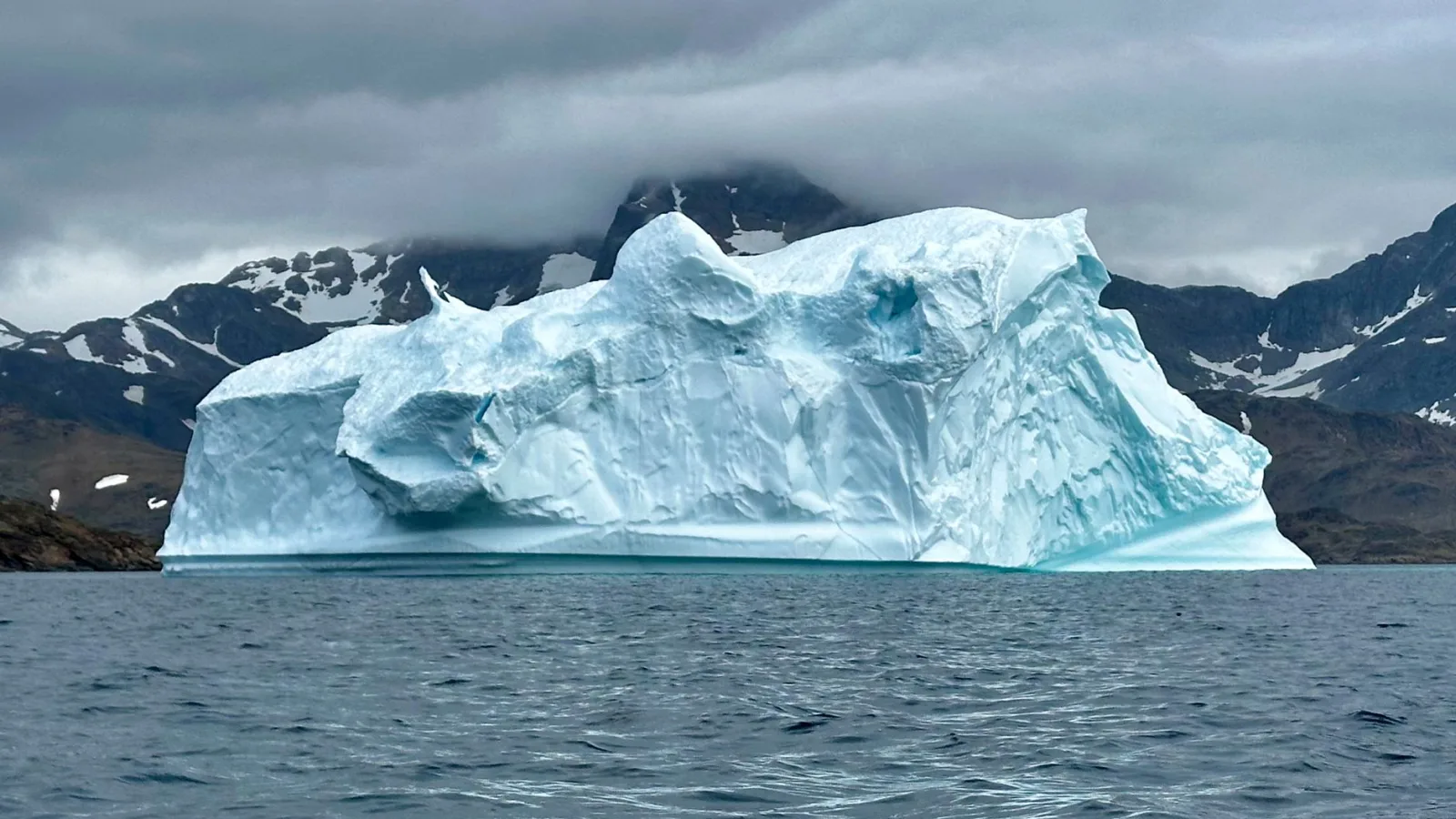
The United States has signed a new defence agreement with Denmark and Greenland, paving the way for Washington to establish two new military bases in the strategically important Arctic territory.
The deal, inked by US President Donald Trump and Danish Prime Minister Mette Frederiksen at the UN General Assembly in New York, aims to strengthen the US military presence in the Arctic while explicitly reaffirming Copenhagen's sovereignty over Greenland.
Greenlandic Prime Minister Jens-Frederik Nielsen, who also signed the agreement, hailed it as a "win-win-win" for all parties involved. The signing ceremony reportedly saw a strikingly upbeat and friendly mood, marking an apparent end to more than a year of tension over the semi-autonomous Arctic island.
Before the signing, President Trump stated, "we will immediately begin the process of developing a large military presence in the appropriate locations." Prime Minister Frederiksen added that the deal was "good for the US, Denmark and Greenland" and also beneficial for Europe and Nato.
The agreement updates and amends a 1951 defence pact between Denmark and the US, a cornerstone of their long-standing security cooperation. The new provisions specifically allow the US to "establish an additional Defence Area at Narsarsuaq and Mestersvig," referring to locations in Greenland's southern and eastern regions respectively.
Narsarsuaq, located in southern Greenland, is a former civilian airport and a significant World War Two base. It boasts deep-water access and a large runway, which US military engineers had recently surveyed, as confirmed by the US North Command. The Mestersvig outpost, situated in eastern Greenland, is described as remote and less developed, currently utilised by a Danish naval dog sled unit.
Beyond the establishment of new bases, the agreement also grants the US permission to "modernise and expand its activities" at its existing Pituffik Space Base, located in Greenland's north-west. The US currently maintains over 100 military personnel permanently stationed at this base.
A critical aspect of the new pact is the explicit barring of non-Nato states from establishing military installations or maintaining a persistent military presence in Greenland. The text states that "no state that is not a member of Nato shall be allowed to establish its own manned or unmanned military installations in Greenland nor shall they be allowed a persistent presence of military forces in Greenland." While it was considered highly unlikely that non-allied troops would have been granted access previously, the inclusion of this clause formalises the exclusion.
Significantly, the deal makes no provision for the cession of territory to the US. It unequivocally recognises both Denmark's "sovereignty and territorial integrity" and Greenland's right to self-determination. This particular clause represents a notable climb-down from President Trump's earlier, controversial calls to acquire the Arctic island.
The previous year had been marked by diplomatic strain following President Trump's rhetoric about "taking" Greenland. He had cited national security concerns, highlighting Greenland's strategic defence location and its rich mineral wealth, as reasons for his interest. These comments had provoked strong reactions and outcry from Greenlanders, Danes, and wider European leaders, who issued a joint statement at the time warning that his words could "undermine transatlantic relations and risk a dangerous downward spiral."
Despite the diplomatic tensions that preceded it, the mood at the signing ceremony was described as amicable. President Trump expressed optimism, stating, "we're going to have a tremendous relationship, a secure relationship. This is tremendous for Europe and for the United States, for everybody, and for Greenland it's going to be incredible."
Prime Minister Frederiksen echoed this sentiment, calling the agreement a "milestone in our long-standing co-operation." She reflected on the historical context, noting, "Seventy-five years ago we entered into an agreement about the defence of Greenland. Today, we're signing an even bigger and better agreement – a deal that can last forever." She further emphasised that the agreement "respects sovereignty and territorial integrity of the Kingdom of Denmark, as well as Greenland's right to self-determination."
Greenland's Prime Minister Nielsen underscored the collaborative nature of the deal from Greenland's perspective. "For Greenland, it is not only an agreement about us, it is [an] agreement with us," he said. He added that the pact "takes into account the people of Greenland, our rights, our livelihoods and the development of our country." Nielsen also highlighted Greenland's strategic importance, asserting, "Greenland matters for North American security and for transatlantic security," and noted Nato's key role in the North Atlantic amidst a changing security landscape.
The agreement also addresses Greenland's future constitutional status, confirming that the territory would remain within Nato should it achieve independence from Denmark. However, the "modalities and technical details" of the new bases are yet to be fully confirmed and, according to the deal, must be mutually agreed by all parties. This ensures that the US security arrangements are not unfettered and still require the approval of both Greenland and Denmark.
In the lead-up to the deal, President Trump had campaigned for months to purchase or annex Greenland, arguing its vulnerability to adversaries such as Russia and China. He had linked the Arctic island to his ambition to build a futuristic "Golden Dome" defence system to protect the US against missile attacks. However, the signed agreement only mentions this project once and contains no concrete proposals regarding its implementation.
A Nato spokesperson swiftly welcomed the agreement, stating it would "help advance security, stability and cooperation in this vital region." In Denmark, the deal is being largely seen as a triumph of diplomacy, with several political parties already indicating their support for its parliamentary approval. For Greenland, home to a population of 56,000, the resolution of months of crisis and the affirmation of its role as an equal partner at the negotiating table has been met with a significant sense of relief.