
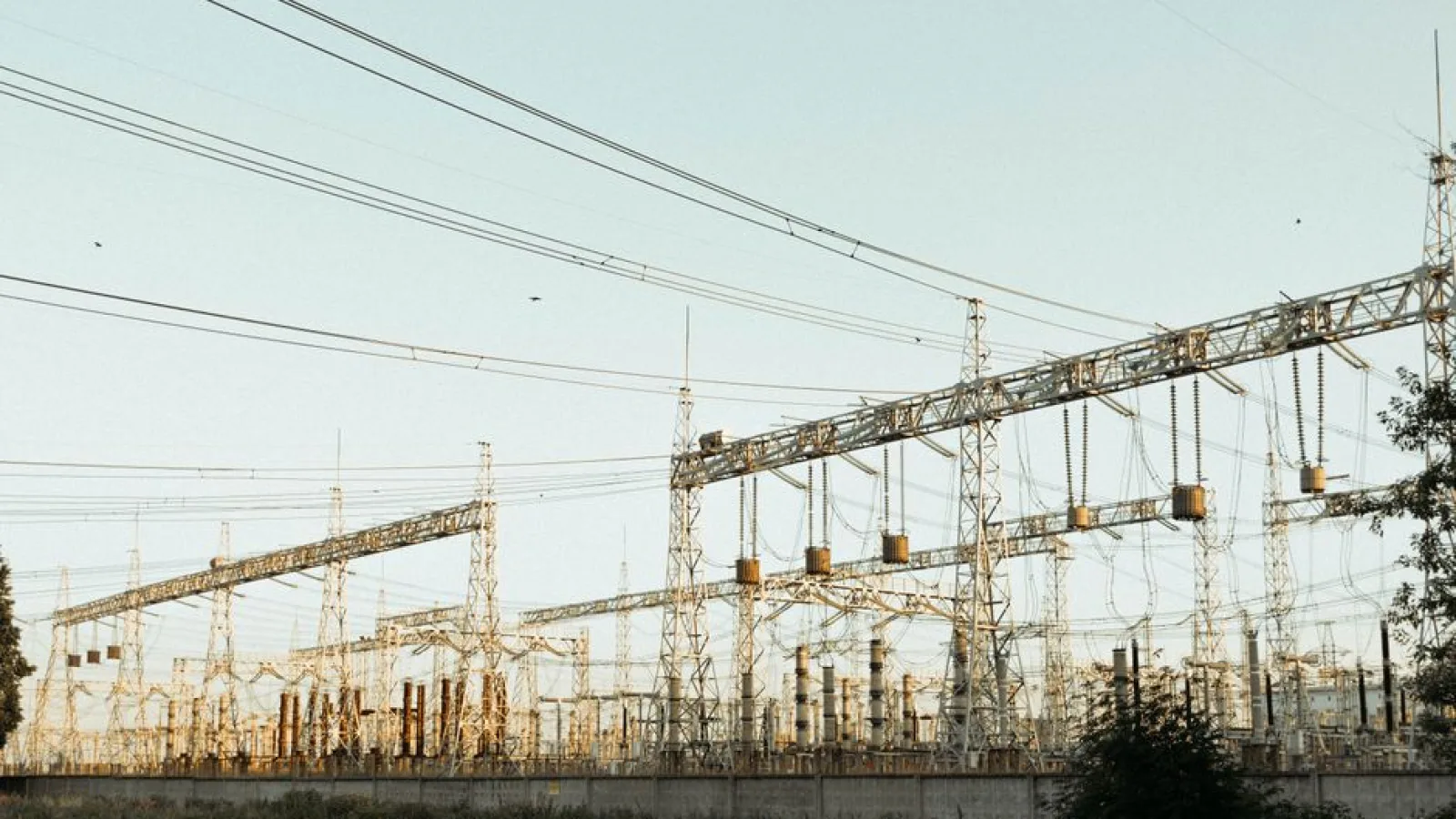
Recent disruptions to global energy supplies stemming from tensions in the Middle East have drawn renewed attention to the necessity of developing a more resilient energy system, particularly for Asia and the broader international community.
Wolf Mueller, CEO of the service business unit and executive vice-president of Swiss technology firm Hitachi Energy, highlighted these challenges in an interview at the 17th International Infrastructure Investment and Construction Forum and Exhibition held in Macao. He emphasised the growing imperative to accelerate the deployment of renewable energy sources, electrification efforts, and investment in grid infrastructure to mitigate dependence on volatile fossil fuel markets.
"The current oil-induced crisis reinforces the need to speed up renewables, electrification, and grid investments to reduce exposure to global fossil fuel fluctuations," Mueller noted.
Mueller underlined the centrality of electricity security as a foundation of national security, suggesting that governments should increasingly recognise power systems as critical infrastructure. Regarding China, he described the country as favourably positioned for energy security due to its diversified energy portfolio, status as the world’s largest renewable energy market, strong growth in hydropower and nuclear capacity, and an extensively connected grid network.
The three-day forum held in Macao carried the theme “Boosting Green Digital Infrastructure Connectivity” and gathered international stakeholders focused on infrastructure development. The event was co-organised by the China International Contractors Association alongside the Macao Commerce and Investment Promotion Institute.
Concurrently, Hitachi Energy held a thematic forum aimed at fostering a sustainable global infrastructure ecosystem through lifecycle partnerships. Mueller spoke to the company’s growing involvement in China’s energy transition, noting significant demand for modernising and digitalising power assets during the country’s 15th Five-Year Plan period (2026-2030), when China intends to establish a new type of energy system.
He cited the company’s recent delivery of the world’s first 550 kilovolt sulfur hexafluoride-free retrofit solution at the Zhejiang Beilun power plant as an example of advancing low-carbon infrastructure.
Aside from energy security concerns, Mueller pointed to the surge in electricity demand driven by emerging technologies such as artificial intelligence. He identified grid expansion as the current bottleneck, advocating optimisation of existing infrastructure as a near-term response.
"The most immediate lever available is making better use of current assets and optimising the energy infrastructure already in place," Mueller said. The integration of AI with energy systems, he added, presents critical opportunities where energy supplies support AI operations, while AI tools can enhance energy system efficiency.
China’s leadership in grid modernisation and renewable integration offers a notable example internationally. Mueller highlighted initiatives like “East Data, West Computing,” where computing demand is strategically matched with regions rich in renewable resources to advance energy-efficient AI development.
The company executive concluded by advocating for stronger global cooperation to manage the scale and pace of the global energy transition, emphasising China’s expanding role in responding to energy security challenges worldwide.
As energy systems face mounting pressures from geopolitical tensions and rapid technological change, the development of adaptive, low-carbon power infrastructure will remain central to ensuring stability and sustainability across national and regional contexts.