Iran's military forces have reportedly damaged multiple American military aircraft in overnight strikes on a US air base in Jordan, as a six-month-old conflict with the United States continues to escalate across the Middle East. The incidents follow increased attacks on commercial shipping in the Strait of Hormuz, which have also resulted in casualties.
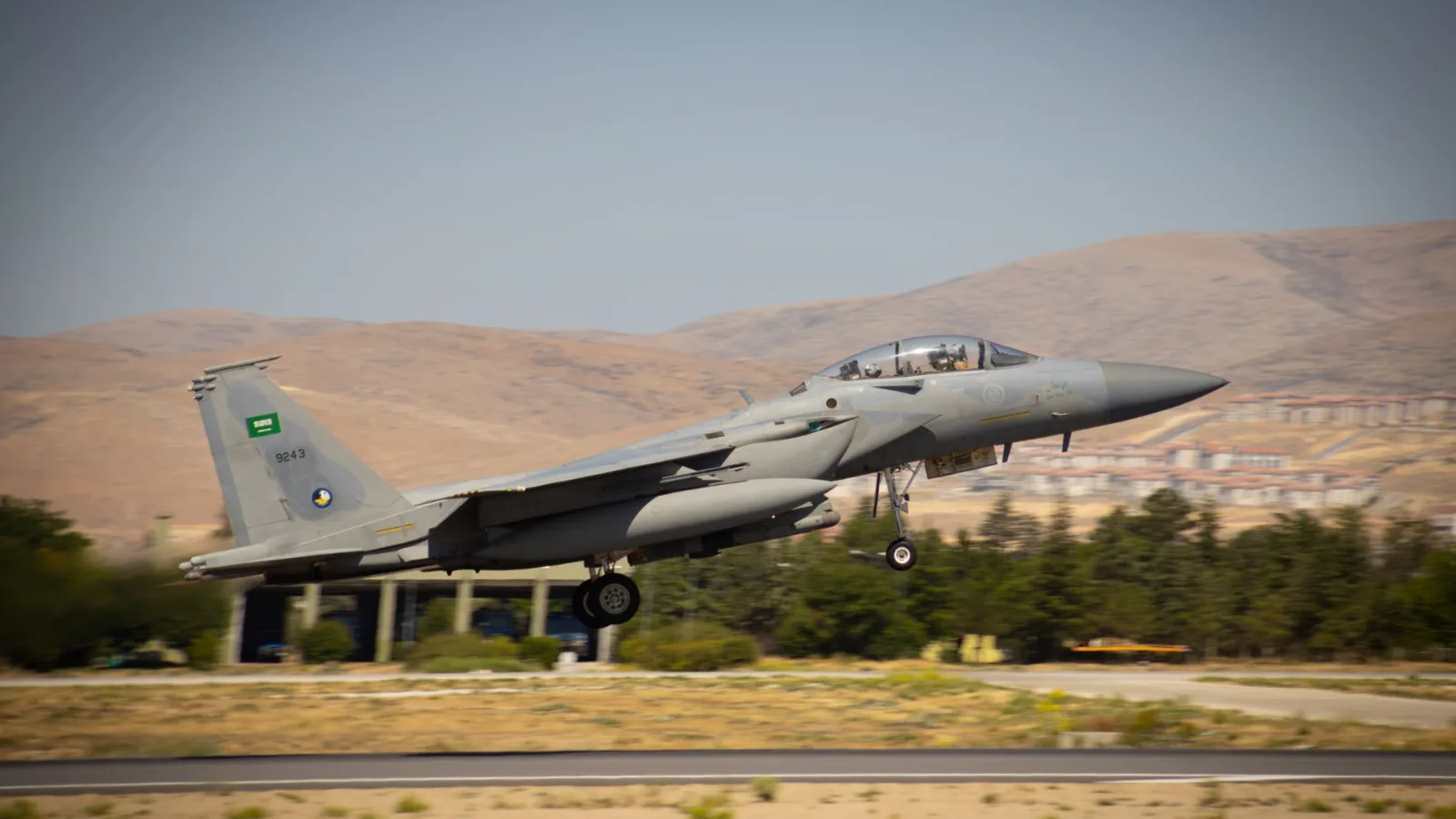
According to a report by CBS on Wednesday, an A-10 Thunderbolt ground attack aircraft, known as the Warthog, lost a wing during Iran’s assault on Muwaffaq Salti Air Base in Jordan. The report added that approximately eight F-15 fighter jets also sustained light damage but were subsequently returned to service. The US military has not officially confirmed these specific details, though a US official stated all American troops were accounted for after the strikes.
Iran confirmed it had fired ballistic missiles at a US military base in Jordan. Jordanian authorities reported intercepting 18 missiles, with two others landing in unpopulated areas without causing harm. US forces at the base reportedly launched more than 30 Patriot missiles in defence against the incoming Iranian barrage.
The Revolutionary Guard Corps (IRGC), Iran’s elite military force, stated it would "sharply escalate" its response to any further attacks. It also announced plans to release maps of a new, enlarged "off-limits zone" at sea, which would extend as far as Chabahar on the Iranian coast near Pakistan, indicating a potential expansion of naval operations.
These strikes mark a significant escalation in a conflict that has seen the heaviest attacks on commercial shipping since its inception. The US had previously attacked five Iranian tankers, which it stated was in retaliation for Iran targeting a US Navy warship. In response, the IRGC launched attacks on eight tankers and two warships, in addition to the strike on the Jordanian base. At least one seafarer has been reported killed and another is missing following the recent shipping attacks.
Amidst these military developments, former US President Donald Trump issued a strong warning to Iran regarding construction activity at a deeply buried complex known as Pickaxe Mountain. Mr Trump cautioned Iran "not to get cute because we will have to hit them very hard," suggesting the US could strike the site.
His warning follows a new analysis published on Wednesday by the Centre for Strategic and International Studies (CSIS), a Washington-based think tank. The analysis, based on satellite imagery, identified a sharp increase in construction activity this year at Iran’s Pickaxe Mountain complex, located near its Natanz uranium enrichment facility.
CSIS found that imagery from 2020 to 2026 showed the site transitioning from active excavation to probable internal construction and continued reinforcement of the complex’s exterior. Road activity at the site this year was noted as being higher than at any other point since construction began. Specific activities include the hardening of tunnel entrances, paving internal roads, reinforcing access areas, and the removal of excavation spoil.
Pickaxe Mountain, situated approximately two kilometres south of the Natanz facility, is a large underground tunnel complex built into granite. CSIS noted that its considerable depth and fortifications would render it "extremely difficult to destroy, even with the heaviest US conventional bunker-buster bombs."
However, CSIS also highlighted that the available imagery could neither confirm nor disprove Israeli intelligence claims that Iran had moved centrifuges into the complex. The absence of an increased security presence and a lack of observed non-construction vehicles and equipment suggested that the underground facility was not yet capable of uranium enrichment, assuming that is its intended purpose. The think tank concluded that open-source evidence was insufficient to determine the exact nature of the activities inside the facility, but suggested possible uses include centrifuge assembly, uranium enrichment, and other nuclear-related research. Mr Trump has previously accused Iran of seeking to develop nuclear weapons, a claim Tehran denies.
The escalating conflict extends beyond direct US-Iranian confrontations. Pakistan has issued a stern warning to Iran to curb the actions of its Yemeni Houthi allies, who have intensified attacks on Saudi Arabia. This warning is part of a coordinated effort to prevent the regional crisis from spiralling further.
Pakistani defence minister Khawaja Asif stated on Pakistani TV that any aggression against one of a tripartite security arrangement involving Riyadh, Ankara, and Islamabad "will be considered an aggression on all three countries." Pakistan’s warning carries significant diplomatic weight due to its established defence pacts with both Saudi Arabia and Turkey.
The Houthis recently struck an airbase in Khamis Mushait and oil infrastructure in nearby Saudi cities, wounding 73 people. This constituted one of the most significant attacks on Saudi Arabia since the US-Israeli conflict with Iran began in February. Houthi military spokesman Yahya Saree stated on Wednesday that Saudi warplanes had carried out 54 airstrikes across various Yemeni provinces over the preceding 12 hours, vowing that these "would not go unanswered and unpunished." Saudi civil defence subsequently issued an emergency alert for Khamis Mushait, the fourth such alert in 24 hours, though it later confirmed the danger had passed.
The broader conflict has also significantly impacted global oil markets. Oil prices held firm on Thursday, with Brent crude briefly breaching $100 a barrel. Traders are reportedly bracing for deeper supply disruptions as Iran and the United States launched their largest attacks on shipping since the six-month-old conflict commenced. Brent crude futures inched lower by 0.1 per cent to $101.10 a barrel by 0256 GMT, while US West Texas Intermediate crude was trading at $96.24 a barrel, up 0.2 per cent. Brent prices have surged nearly 30 per cent since early August, attributed to the failure of a permanent agreement between the US and Iran to cease attacks and the renewed fighting later that month. The rise in oil and gas prices has emerged as a significant political issue for President Trump and the Republican Party in the run-up to the November US midterm elections.
Regarding the conflict's future, Mr Trump has suggested that the war with Iran will continue until after the US midterms. Speaking to reporters, he claimed Tehran was "desperate to try and affect the election so we can get a nice, weak group of people in there and leave them alone and let them have their nuclear weapon." He added that he believed the war would "end immediately after the election, because they can't hold out any longer." Mr Trump also stated that he was not looking to negotiate with Tehran in the near future, citing Iran's weakened state.
Economically, Iran has been utilising barter-style arrangements to circumvent oil sanctions, reportedly acquiring $1 billion of Chinese goods, including military gear. Senior Iranian sources and three other individuals familiar with the matter told Reuters that under this mechanism, Iranian oil is exchanged for credits for Chinese imports. This provides a crucial lifeline for the Iranian economy, which has been under significant pressure from US economic and nuclear sanctions. This arrangement also benefits China, the world's largest crude importer, by ensuring continued access to discounted Iranian oil while shielding Chinese banks and companies exporting to Iran from international scrutiny or penalties. The US has imposed sanctions on some smaller Chinese entities involved in buying or facilitating Iranian oil shipments but has refrained from implementing more stringent measures that could have wider repercussions for the global economy.